Showing posts with label Mussar. Show all posts

Monday, February 4, 2019

It's Time to Step Up - and Step Down

I’ve not written in a long time. It’s certainly not for the lack of ideas. The ways in which events swirl around us these days have given me more than a few kernels with which to work. And while life has been busy, I can’t honestly say it’s been for a lack of time. Somehow these past few days have shaken me out of – well, whatever – and I need to write. It also helped that a dear friend and colleague pushed me last week to get writing!

In recent days we have been barraged by the news pouring out of Virginia following the discovery that Medical School Yearbook page for the recently elected Governor, Ralph Northam, contains a deeply disturbing image of two people, one in “blackface, and the other in the garb of a Ku Klux Klan member. While we do not really know whether one of the individuals in that image is a younger Ralph Northam (he has alternatively owned it and denied it), the revelation and the subsequent furor over it is unsettling.

There have been widespread condemnations and calls for the Governor to resign his office. As I write it still unclear whether he will do so. My reaction to the news, aside from disgust, is filtered through the prism of my study and practices of the middot (soul-traits) of the Mussar tradition. I believe Northam should in fact resign. And I believe he should do it as quickly as possible.

In an early response, Governor Northam seemed to own the picture and expressed that it may have reflected him at an earlier time in his life, in which he may (or may not) have held and found humor in the disturbing image. He claimed that he no longer holds those views and that he is a changed man. As troubling as I find someone believing it was a humorous expression, I do believe in our tradition’s concept of Teshuvah – repentance.  Indeed, the concept is so central in our tradition that it is not merely related to our annual Days of Repentance which take us from Rosh Hashanah to Yom Kippur. There is a prayer for teshuvah, that is, the ability to reflect on and engage in teshuvah in the daily liturgy. It is recited on most days (exclusive of Shabbat, holidays, and other special times designated in Jewish tradition.) Had Northam stuck with his ownership of the image on his Medical School Yearbook page, and with the statement that it does not represent who he is and what he believes today, perhaps I could allow him some time and room to prove himself.

I leave aside the Governor’s shifting responses and could attribute them to “politics as usual.” Too many in the public sphere play the game of navigating amongst responses when they have been outed for some misdeed.  They cast about until an explanation seems to settle. We who listen find ourselves like sailboats facing ever-shifting winds. To be sure, this is not exclusive to public figures. Even as I could hear and respect the confession of a misdeed or an inappropriate expression from an earlier point in time, on which an individual has had a change of heart and mind, it’s not that simple for me in this case.

I am focused on a different concept from the Mussar tradition, that of Achrayut – responsibility. In a post on the subject, Rabbi Shmuly Yanklowitz writes, “Achrayut comes from the root “acher” (other). To take responsibility means to cultivate the “ability” for response to an “other.” This responsibility to another is born in the moment where no one else is present to assist. As Hillel said (Pirke Avot 2:6) ‘In a place where there aren’t people of moral courage taking responsibility, one needs to step up.’”  These days we often hear the language of being “upstanders” rather than “bystanders” when we see injustice, bigotry, hatred, or any of the other ills with which people harm one another. Being an upstander is the act of taking Achrayut- responsibility. It is true that over time and through the experiences of our lives, we learn through trial and error. We can and should change. Indeed, that is a part of the essence of the study and practice of Mussar. And striving to become a better person is hardly the sole province of Jewish tradition.

The shift between the Governor’s initial response owning the picture and his subsequent disavowal is, for me, beside the point.  Governor, whether you are in fact in it or not, the picture is on your yearbook page. I believe it is a reasonable assumption that at some point you had to approve your page. For me, whether you are one of the two figures in “costume” in the picture is immaterial. It is your page and you must, therefore, accept responsibility for what is on that page – irrespective of whether you are, in fact, one of the two people in that distasteful picture. And I believe your responsibility does not hang on whether you purchased a yearbook those many years ago. You cannot possibly expect us to believe you’ve never seen your page until now. That is too disingenuous a notion for any public official to expect his or her constituents to accept.

Governor, the honorable thing for you to do at this moment is for you to show some character and values. Step up – and step down! That is the responsible thing to do.

Monday, December 3, 2018

Some Thoughts on Perspective

Last week I attended a public hearing in my hometown of Newton, Massachusetts. The gathering was extremely well-attended. It also revealed some of the deep fractures in our community, and our nation in these times. The hearing was convened by our School Committee in response to a citizens’ petition alleging that the curriculum in our public high schools contains bias, as relate to anti-Semitic and anti-Israel teachings. This hearing comes after seven years of attacks and allegations. The auditorium, in which last week’s hearing was held, was filled to overflowing with hundreds of attendees, representing all sides of the controversy.

Everyone who signed in requesting a speaking slot at the beginning of the evening was granted up to 3 minutes in which to make their comments. Time was kept with a timer on a large screen behind the School Committee members so that all could see that each speaker was granted his or her allotted time. I was grateful that the school committee patiently sat and listened, while each person who asked to speak took their place at the microphones at the front corners of the auditorium.

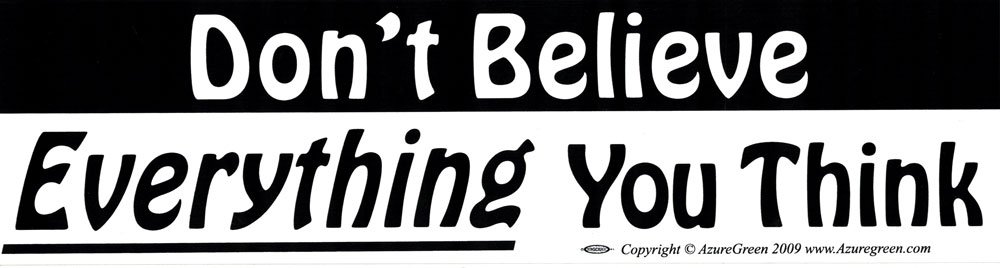
I write not to affirm nor criticize any of the speakers, or the groups who had organized on various sides of the matter. I surely have my feelings, and indeed, I was one of the speakers at the hearing. But as I reflect on last week’s forum, I am reminded of a saying I learned several years ago. Those who know me are familiar with the fact that I am often inspired by things I see around me which might otherwise pass unnoticed. One such source of inspiration comes from bumper stickers I see on cars as I traverse the highways and byways of our communities. Several years ago I spotted one such bumper sticker which became the focus of an entire Yom Kippur sermon. It read: “Don’t Forget Who You Always Wanted to Be!”

In the days following last week’s hearing, I recalled another bumper sticker which I noticed almost a decade ago. Frankly, I had forgotten about it until searching for some older writings I know I had from several years back. In my search, I turned up a piece which I had started to compose, but had set aside and marked “Not Used.”  As I read the fragment I realized that the message I’d seen almost a decade ago still speaks to me as I reflect on last week’s hearing. It was a bumper sticker I had noticed not while my car, but rather in one of the many coffee houses, I visit in the Berkshires each summer. The establishment in which I noticed this sticker had an entire wall of such stickers, from which there were quite a few that caught my attention. I remember thinking at the time, oh boy, lots of sermon ideas. However, on that occasion, I only made note of one whose message summed up a lot of my thinking over the course of that summer.  Now, almost a decade later, it still strikes me as relevant – and important.  Its simple message: “Don’t believe everything you think.”

Part of what made last week’s public forum an important event for me was that every speaker was afforded the same allotment of time, irrespective of his or her viewpoint. This was an important exercise in public discourse and a civil, democratic community. Certainly, there was a broad spectrum of viewpoints, as there is in just about every corner and on every subject in our society in 2018. But that bumper sticker I noted almost a decade ago, and my studies of the Jewish Spiritual practice of Mussar – especially as they regard the soul traits of humility (anavah) and truth (emet), taken with the simple message of that bumper sticker. In a pluralistic society, where we are afforded freedom of thought and freedom of expression, we must never take for granted the right to speak forthrightly our opinions. At the same time, it is extremely important that we not confuse our opinions – nor our interpretation of what we consider fact – to be the absolute truth.  There was a point in last week’s hearing in which one speaker asked why the School Committee was not listening to the “truth.” As I listened and considered the speaker’s viewpoint, as well as the one I had presented, I realized that my words were just that – my words, my opinion, my interpretation. Certainly, I believe that I am attempting to read everything honestly and with a clear mind, so I can speak what I believe is true. But we are limited beings, with limited capacity to know the truth. I believe there is such a thing as absolute truth. But I am guided by the teachings of the 12th century Jewish legal and philosophical master, Moses Maimonides when he cautions us that as human beings our capacity to “know the truth” is limited by our human qualities. We can pursue the truth, but our limitations prevent us from ever absolutely attaining it with certainty.

The saying, “Don’t believe everything you think!” is, for me, not merely a catchy phrase on a bumper sticker. It is a call to honest reflection. It is a challenge to acknowledge that our knowledge and understanding are colored by the lenses through which we see the world. We must approach sharing our “knowledge” and understanding with humility and respect for the very real likelihood that there is a larger truth we may not fully comprehend. We all need this perspective in our contentious, fractured reality as we close out 2018 in anticipation of 2019.

Monday, November 26, 2018

Nedivut - Generosity: Mussar Thoughts on the Eve of #GivingTuesday

Thanksgiving was a welcome diversion from the world! It was great to retreat to a special place with our family. It was delicious to step back from the news (for the most part), the challenges our world faces, and to face one another for a few days. What a treat to gather with three generations for food, fun and lots of laughter. Now that Thanksgiving weekend is receding, our secular holiday calendar has taken over. “Black Friday” was hard to miss, though I found that by staying in our retreat spot I was able to ignore it to a great extent. Now that I have returned home, and now that I have returned to my inbox, it’s nigh impossible to ignore the tidal wave of messages – either trying to lure me on this “cyber-Monday” or calling out to me as tomorrow, the much heralded “Giving Tuesday” arrives. Of course, with the end of the secular year in sight, many are focused on those gifts we typically make at years’ end so as to maximize the tax benefits of giving. Last year’s Tax Bill changed the impact of our charitable gifts on our tax filings. How that really plays remains to
be seen.

But now seems a good time to reflect on a middah (soul trait) from the Mussar tradition on which I am currently working with one of my Mussar groups. Several of the groups with whom I am working are “advanced groups,” in that they have been meeting for several years.  Part of what I really enjoy about my work with these groups is their thirst for in broadening our Mussar horizons as we venture into the exploration of and practice with middot which are not typically in the basic curriculum of beginning groups. For me, the challenge to expand my repertoire, study middot and develop materials for these groups is nourishing. It is expanding my own soul-curriculum, and I love it!

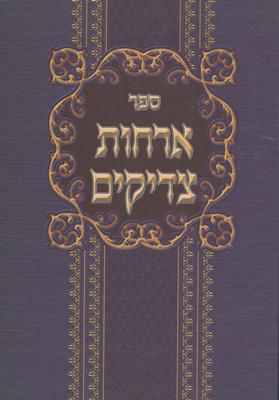
One of my groups chose Nedivut/Generosity for this year’s journey. While I had studied the classic Mussar text, Orchot Tzaddikim (Ways of the Righteous – an anonymous text generally thought to originate in the 15th or 16th century) and its chapter on this middah about two years ago with my personal hevruta partner of many years, studying and teaching are two different processes. I have always loved that in the world of Hebrew grammar the Hebrew word for teaching, l’lameyd is a more intensive verb form of the word “to learn” – lilmod. Ever since I first began teaching, during my high school years, when I served as the Music teacher in my home congregation’s all-volunteer Religious School, I have never forgotten that relationship between learning and teaching. It continues to inspire and guide me.

As I think about Nedivut, I am reminded of a teaching from Rav Moshe Leib of Sassov (1745–1807, a disciple of the early Hasidic Master, Rabbi Dov Ber of Mezeritch.) The story is told that Rav Moshe once  asked a miserly person: “What is the difference between looking through a window and looking at a mirror?” Rav Moshe then explained, “When you look through a window you see other people, but when you look at a mirror you see only yourself. And why? Are they not both sheets of glass? The difference is that a lining made of silver blocks the view through the mirror.” That silver, the Rav teaches, is like the silver of our material wealth. He challenges us to consider in what ways our own materials goods and monetary wealth prevent us from seeing the world around us, and other people in our world.  As we step into a season when many of us do a substantive portion of our charitable giving, it’s a good question to ask ourselves. The world around us is filled with sorrow and brokenness. While giving tzedakah is not the only way in which we should engage with repairing our world and helping others, it is a part of our responsibility.

The 20th-century Mussar master, Rav Eliyahu Dessler taught, “That which we give to another person is never lost.” Through our acts of generosity, we are not simply giving up what we have. We are redistributing the stuff of our world so as to have a positive impact beyond ourselves and our family. If we are making a positive difference in the world and the lives of others (which is hopefully our intention when we give) we should not view what we have given through Nedivut as lost. Perhaps we can see it as having found a place or a life in which what we have given can have even greater impact.

In the chapter on Nedivut in Orchot Tzaddikim, which I mentioned above we read: “Our Sages of blessed memory have stated that the trait of nedivut/generosity resides in habit. One is not called generous until one becomes accustomed to giving, in every time and season, and according to one's ability. For one who gives to a deserving person 1,000 gold pieces at once is not as generous as one who gives 1,000 gold pieces one by one, each gold piece to an appropriate recipient. One who gives 1,000 gold pieces all at once is seized with a fit of generosity that afterwards departs.”  I do not read the teaching of Orchot Tzaddikim as discouraging larger gifts. The teaching is encouraging us to develop the trait of nedivut ha-lev – “a generous heart.” We should work on ourselves so that we are accustomed to giving, not just on one day a year, or in one season of the year. Indeed, the goal is for us to make nedivut and tzedakah a regular part of our lives, week in and week out, in all seasons. That is certainly a reflection for each of us as #GivingTuesday arrives.  

Friday, November 16, 2018

Finding Balance

Thanksgiving is peeking around the corner. The hours of daylight are dwindling. We know well that this is part of a cycle. Yet, I also feel as if the darkness which surrounds us is growing in more than just the natural world around me. With last week’s elections mostly in the rearview mirror, I had hoped the tenor of our national discourse might die down a bit. Alas, we live in a world in which events – both those resulting from human actions, as well as what our insurance policies label as “acts of God” come in a seemingly never-ending stream.

I keep reminding myself that this Shabbat will mark just three weeks since the horrific shooting at the Tree of Life congregation in Pittsburgh. That nightmare thrust not only the Pittsburgh community into darkness. A shroud descended on Jewish communities throughout our country. Judging from the kindness and comfort of neighbors, friends and the communities which surround us, the darkness was felt far beyond the boundaries of our Jewish communities. And dark events have continued: shootings in numerous settings and communities, the ongoing fires in California, more revelation of anti-Semitic incidents, the ever-present political noise, and so much more.

In the weeks since Pittsburgh, I have found the conversation and mood in the various Mussar groups with which I work around Boston deepening. The groups involve some 85 or so participants. There is seems to me, a shared sense that our study and practice of Mussar – the Jewish spiritual practice of character development and moral improvement -- has taken on a new urgency and a deeper purpose. I know that for me, my personal journey into Mussar study and practice has been a source of grounding in a world which it can be so hard to maintain a sense of balance. To paraphrase my teacher Alan Morinis, the founder of The Mussar Institute, the purpose of Mussar practice is to help individuals deepen their understanding of the ways of the soul, and to guide them in overcoming obstacles which keep them from attaining a sense of inner wholeness (shleymut) and holiness (kedushah). 

A core teaching of Mussar is that our deepest essence is inherently pure and holy. However, our inner is obscured by extremes of emotion, desire, and bad habits which veil the inner light within us. Our task in life is to break through the “veils” and uncover the brilliant light within our soul. The Mussar masters developed a host of teachings and practices—some of which are contemplative, some of which focus on how we engage with other people in daily life, some seek to impact our sense of relationship with God. All are designed to help us heal and refine ourselves. Mussar is both a body of knowledge and a perspective on life. It is also a discipline because Mussar knowledge is not meant to be a merely intellectual pursuit. The teachings of Mussar are meant to be activated in our daily lives.
Mussar is built on the concept of middot (singular – middah), “soul traits” which are elements of our character. These include humility, honor, patience, gratitude, generosity, anger, forgiveness – and the list goes on. We each carry all the traits. However, we each carry them in different ways and different strengths. The path of Mussar invites the student/ practitioner to consider a single trait for a period of time so she can learn about her strengths and opportunities for growth.

Each middah is imagined along a spectrum ranging from extremely strong to absent. The general goal, I believe, is to try to walk within what I like to call “the broad middle.” Akin to Aristotle’s Golden Mean, Maimonides’ Shvil HaZahav (the path of moderation), Buddhism’s Middle Way, and other similar portrayals of the ideal path in life, the “broad middle” beckons us to strive for a balance. We can track a similar range for each of the middot. For example, we should exhibit not too much humility (or a lack of self-worth), but neither should we allow our sense of self to grow unbounded so that there a total absence thereof. In the case of generosity, we should strive not to be miserly. Yet nor should we be so generous as to give it all away. As Alan Morinis teaches, there are times when the middle is not the ideal path: For example, “in the face of injustice patience is not a virtue.” Just like a gymnast who navigates a balance beam, we must make constant adjustments. As dynamic beings, each of our middot/soul traits is in flux. So too, is the world around us. Through Mussar study and practice we hold up a mirror in order that we might examine ourselves with an eye towards personal improvement and growth. 

Part of what I love about the study and practice of Mussar is that while we each have what Alan calls our own personal “soul curriculum” soul traits which need more or less work, we practice in the context of a va’ad, a group with whom we share the journey. At present, I work with five such groups. I also study as part of two personal study pairs (hevrutot) with dear rabbinic friends and colleagues. Sharing the journey helps me as I learn from those around me with whom I share my struggles, my insights, my successes, and the learning. In the darkness which I so often feel pervades our world, I have trusted companions with whom I can share the journey. This adds meaning to my life. The study, practice and my companions help provide a sense of balance.

In one of my groups, we have been working for the past month with the middah of menuchat ha-nefesh which is often translated as “equanimity” or “tranquility.” So much has happened since we began our focus on this soul trait which has thrown us off in terms of a sense of equanimity. The rash of pipe-bomb packages; the shootings in Pittsburgh, Thousand Oaks and elsewhere; and the terrible loss of life and property in the fires consuming vast parts of California; all disrupt the sense of wholeness in our world. Add to this the hateful rhetoric which flies in too many directions and too many places in our country. Just yesterday morning I awoke to a news story about a 10-year old Framingham girl, a Muslim student who received two notes in her school box. One accused her of being terrorist, and the other threatened her life. Why do our times make such forms of expression possible? A 10-year old child? That expression was learned somewhere. How do we dial that back? I also read yet again about the intensifying wave of anti-Semitic and other hate expression uncovered in the Reading Schools to the north of where I live. This morning it was at UMASS-Amherst. How do we impress upon our elected officials that hate, division, demagoguery, bullying, and personal attacks are unacceptable? We are better than this.
To enhance my sense of menuchat ha-nefesh, to strengthen my sense of balance, I have decided to tune out of social media, and indeed, most media for the week ahead. I want to focus my Thanksgiving week on middot, such as kavod/honor and hakarat ha-tov/gratitude for the people in my life, and for the blessings I enjoy. It’s not that I think the world will suddenly straighten itself out next week. I don’t. But I can find balance, strength, and blessing by stepping back and refocusing. May the coming holiday week bring us a sense of awareness of our blessings, and a sense of balance so that, renewed and strengthened, we can return to the work of making our world one in which the blessing of shleymut/wholeness can be shared more broadly.

Friday, September 28, 2018

Seeking Emet/Truth in an Unnerving Time

I sat down to write a response to the events which took place in our nation’s capital yesterday with the Senate Judiciary Committee hearings. In short, I want to call for a vote of “No Confidence” in our elected officials in DC. Then I reminded myself that while that maneuver works in Israel and in Great Britain, it does not in our system. What poured forth as I wrote was an angry screed. I have tried to set it aside for now. I may or may not return to those writing out and sharing those thoughts. Among the wide range of emotions with which I found myself sitting with late last night was a strong feeling about how damaged we are as a nation; about how damaged our government is, and about how fractured the very concept of “truth” is in our days. As I sat thinking what do with my feelings I remembered a post I wrote several years ago, on the subject of Emet/Truth.  I have adapted part of it here:

Those who know me, know that I have been a student of Judaism’s Mussar tradition for a number of years now. Riffing on the title of David’s Brooks’ inspirational book The Road to Character, I have taken to calling Mussar “the Jewish Road to Character. What started as a weekly dive into mussar texts with my hevruta (“study partner”), Rabbi Jonathan Kraus almost five years ago, has led to a dramatic realignment of my life, my focus, and my work, as I now spend a great deal of time reading, studying, and teaching about Mussar. Indeed, as the Holy Day/Festival season ends in coming days, my main work focus over the coming year will be leading Mussar groups around the greater Boston area, as well as continuing my personal research and writing in the field of Mussar.

As I tried to bring myself back from the soupy mix of emotions after yesterday’s deeply disturbing hearings I was reminded of a Mussar teaching on the middah/value of Emet/Truth from an early 19th century text entitled Cheshbon HaNefesh (literally “Accounting of the Soul”) by Rabbi Menachem Mendel Leffin of Satanov. In my various mussar studies, with my friend Rabbi Kraus, and under the auspices of the Mussar Institute, I am constantly struck by the immediate sense of applicability of these teachings from centuries earlier than our own to our own time and its challenges. As we come to Shabbat, I share just a small piece of Rabbi Leffin’s teaching on truth. While it might seem that I am bringing it out in response to these past days, I lift it up, also as we approach the coming days. May we all consider its applicability to our lives, and to our complicated time. Rabbi Leffin teaches (in the 18th century!):

"TRUTH - Do not allow anything to pass your lips that you are not certain is completely true . . . Lying is a most despicable spiritual illness. At first it stems from the pursuit of permitted pleasure, money, prestige or the esteem of men. It then progresses towards the pursuit of prohibited pleasures. At the end, it becomes an acquired inclination of its own lying for the sake of lying! When it is combined with the yetzer hara (“evil inclination”) of mocking and of idle talk, it brings man to the point where he will even swear falsely, God forbid. For example: A haughty person expends all of his efforts to flaunt virtues which he does not possess. He strives to deceive others through mountains of lies and exaggerations hoping that they will believe him.

"A person who mocks also slanders and discredits decent people. A person who flatters, uses falsehood as his chief weapon . . . Then there’s the cheat who lies for money; building his livelihood and his prestige and his business on this virtue. His expertise in deception, cheating, wrongdoing, mocking, slandering and flattering makes him a person to be feared . . .  But in the end, falsehood has no base on which to stand. And if the liar should later speak truthfully, no one believes him any longer. This is the punishment of those who are haughty, hypocritical, deceitful or who cheat others they are discovered and exposed, first by one friend and then by another, until their lies are publicized and they become full of shame, debased and hated by all.

"Therefore, one must, from the very beginning of its appearance, search for the root of this illness and root it out by applying the disciplines of humility, righteousness, and silence. Afterward, one must include the discipline of truth by committing himself to the positive precept of loving truth even when doing so will cause him to forgo some monetary pleasure or presumed honor . . ."   (from Cheshbon HaNefesh, chapter 12)

Yesterday brought powerful testimonies from the two central figures who spoke before and were questioned by the Senate Judiciary Committee. For the most part, our elected officials have lined up along partisan lines. Their respective senses of the “truth” are, I daresay, not based on the words of the two individuals who gave testimony yesterday. We heard histrionic displays from quite a number of other players – both inside the hearing chamber, as well as from various figures around our nation’s capital, and on our airwaves. Not lost on me personally is the irony that some who spoke the loudest have, it seems to me, not even a passing acquaintance with the truth.

Many things are getting lost in the tumult of these days. Not the least of these is any semblance of, or respect for, “truth.”  I am fairly certain we will never really know the “truth” in this ugly chapter. I am deeply troubled by those who wish to rush this nomination for our nation’s highest court in the face of such confusing and troubling discourse. I can only hope that all the players step back over the weekend to reflect on it all. I confess I am not optimistic that many will do so.

For now, I pray that Shabbat and what remains of Sukkot gives us pause and time for reflection and honesty for each of us within our own kishkes before we – and our leaders – we return to the battlefield in the week to come.

Sunday, September 9, 2018

Feeling Losses, Counting Blessings

This is our season of introspection and reflection. For me, this is the first Holy Day season in my life as a husband, father and grandfather, when I am not spending the Holy Days with my family. In June I was invited to come join a small and inspiring community in Bethlehem, New Hampshire to be their worship leader and teacher during these Holy Days.  Having now spent two Shabbatot with them, I can say that I surely feel the absence of my family, and that I will miss being with them over these coming days. I also feel embraced and more deeply appreciated than I could have imagined by the community here in Bethlehem.

This summer has found me in my car more than ever, driving long distances. I’ve had the opportunity to listen to quite a number of audiobooks, on a wide range of topics. I have also had a lot of time to think – and given the beauty of my surroundings to take stock of life and the beautiful world in which we live. It’s kind of hard not to be inspired by the beauty of the Berkshires and the White Mountains of New Hampshire, and the Green Mountains of Vermont.

Along the way, and in recent days I have learned of the deaths of several people who have been a part of my journey over these past two decades. I was grateful that I was in town to attend the funeral service for Tony Bibbo, with whom I worked over many years in Newton community events, most especially the annual MLK Day commemorations and the Annual Mayor’s Prayer Breakfasts.  Sitting in the congregation at his funeral service, thinking about my interactions with Tony and listening to the tributes from family and community leaders was deeply inspiring. It made me realize that in Tony, I had had the privilege of knowing and working with a living embodiment of the so many of the Mussar traits I study and share with others in my work as a Mussar group leader in congregations around the Boston area, in the Berkshires and in youth settings. As I have written on other occasions, Mussar teaches us how to travel a path that leads us to building strong character through developing our soul traits. These include: Anavah (Humility); Kavod (Honor or Respect); Hakarat HaTov (Gratitude); Menuchat HaNefesh (Equanimity); Emet (Truth); and so many more.  s I listened to the tributes to Tony at Thursday’s service, I realized that as much as I have studied and worked at practicing these, and other traits, in the setting of Mussar Study and practice, even more, I have learned them by being in the presence of and interacting with Tony Bibbo. He was a dear man, and a consummate mensch. Tony was a living embodiment of the best of Mussar tradition. He will be sorely missed by his family and by our broader our Newton community.  May his memory be for a blessing – and may he continue to be an inspiration.

Tony’s death, and the news of other deaths in our community, along with the health and other challenges of close friends has had me, as I drive from place to place, and as I prepare to lead a new community into the New Year, keenly aware of the preciousness of life and of those with whom we share this journey we call life. Even as I build new relationships in my temporary home in Bethlehem, I find myself ever more grateful for those who support and nurture me in my life – my family, my colleagues, my close friends, my teachers. I am richly blessed and have much for which to express my gratitude during these Holy Days.

As our Jewish communities prepare, with the setting of the sun this evening, to turn the page to a New Year, I pray for good health and sweet blessings – for my family and my friends. I pray for opportunities to continue to grow and learn. I pray for strength openness of spirit for our Jewish people, and our brothers and sisters in Israel. I pray for sanity and comity across our nation, and indeed for our world. May this New Year see us move towards one another with open hearts and minds as well as tangible acts that move us towards that wholeness we call Shalom!

To my family and friends, and our Jewish community – L’shanah Tovah u-metukah – wishes for a good and sweet year. To all, may we plant and grow seeds of blessing, understanding, and peace – for all!

Thursday, August 16, 2018

A Message from a 19th Century Teacher For Us!

I’ve spent a good bit of this summer exploring 19th-century Lithuanian Jewish life. And, I have done it from the Berkshire mountains in Western Massachusetts. After staring at two volumes on my growing shelf of Mussar books for several years, I decided that this was the summer during which I was going to take the plunge. And so, I pulled the two volumes ff my shelf and I dove into Professor Immanuel Etkes’ Rabbi Israel Salanter and the Mussar Movement: Seeking the Torah of Truth, and Rabbi Geoffrey Claussen’s Sharing the Burden: Rabbi Simhah Zissel Ziv and the Path of Musar. These biographies of the Founder of the Mussar Movement, Rabbi Yisrael Salanter (1809-83), and of one of his primary disciples, Rabbi Simchah Zissel Ziv (1824-98), grounded and expanded my own appreciation of and interest in Mussar. They shed new light for me on some of the realities and tensions within 19th century Eastern European Jewry. Reform Judaism and Hasidism, for that matter, were not the only innovations in Jewish life resisted by the more traditional Yeshiva-oriented world of that time and place. More about that another time. I found my visit to 19th century Lithuania to be enlightening, uplifting and inspiring in a number of ways. Along the way, I uncovered many new insights, and I happened upon a number of new sources, resources, and teachings which have now been added to my growing reading list.

Today I write to share one such teaching, which I uncovered just a few days before the start of our Hebrew month of Elul. This month is a time of spiritual preparation for our coming High Holy Days which begin with Rosh Hashanah (this year on Sunday evening, September 9th). Courtesy of Rabbi Claussen’s work I was introduced to a short piece which Rabbi Simcha Zissel Ziv posted on the door of his Talmud Torah (study hall) in Kelm during this month of Elul sometime in the 1860’s. As I read this notice from another time and place, I was struck by how much Rabbi Simcha Zissel Ziv’s missive could have been written for us in our time. Rabbi Geoffrey Claussen published a translation of the piece in the Jewish Review of Books in 2013, from which I share a few excerpts here as we prepare ourselves for the coming Holy Days.

Rabbi Simcha Zissel Ziv’s message opens: “As is known, the Sages taught [that God commanded]: “recite verses of Sovereignty (a reference to a section of the Shofar Service on Rosh Hashanah) before Me . . . so that you make me Sovereign over you” (Babylonian Talmud, Rosh Hashanah 34b). When we meditate upon the power to maintain a kingdom [ruled] by [a sovereign of] flesh and blood, [we find that] the kingdom is maintained only when the sovereign’s subjects are all like one person in their service to him. And if . . . division was to emerge among the subjects of the king, the knot of the kingdom would be untied, and (God forbid) the world would be destroyed. As our Sages of blessed memory said, “were it not for the fear [of the government], a person would swallow his neighbor alive” (Mishnah Avot 3:2). Thus [it is] the unity of the subjects [which] maintains the kingdom.”

As I read these words from a teacher in 19th century Lithuania, speaking no doubt to the divisions within the Jewish community of his time, I was struck by their resonance, both for our Jewish community in this 21st century, but also their resonance for us as Americans in these days.  And Rabbi Simcha Zissel Ziv’s missive continues ... “There is an obligation upon us, prior to the Day of Judgment, may it come upon us for good, to occupy ourselves during the entire year with the positive commandment “You shall love your fellow as yourself” (Lev. 19:18). And through this, there will be unity among the subjects of the Blessed Ruler, and [God’s] Sovereignty will come into our hands well ...

“If God forbid, the sin of hating people is on our hands, how can we not be ashamed and disgraced to be speaking lies . . . when we ask, in prayer for God to ‘rule over the entire world, in Your glory’? We have not prepared ourselves to do what is essential for maintaining the kingdom of heaven . . . And so we must accept upon ourselves the work of loving people and of unity. With this, one’s path will slowly, slowly improve—and, in any case, one will already have turned a little bit toward repentance. And, if we merit a community that is immersed in this work during the entire year, who can measure the greatness of the merit for us and for the entire world?

“No one should say that this work is too difficult. It is not only the decree of [our God], but we hope that when one works at this, with appropriate reflection, it will slowly, slowly, become easier, and one will find great joy in it . . . This message should remain before our eyes all year long. And so may we all merit to be written and sealed for good [in the Book of Life] with the whole people of Israel. Amen— may this be God’s will.” 

My friends, these are, I believe, words worthy of our contemplation in these days of prelude and preparation for our Days of Judgment, our Days of Awe! They come to us from a teacher in another time and another place. But they easily could have been written for us. May we use these days to reflect, prepare for the work of Teshuvah- of repentance, and the work of healing ourselves, our relationships, and I pray, our world!