Thursday, June 29, 2017

Tomorrow

June 25th at JFK
I spent this evening with a group of nearly 40 Eisner Camp teens and their counselors, as we prepared for tomorrow’s visit to Auschwitz-Birkenau.  I was profoundly moved by tonight’s conversations: first about pictures, facts and quotes related to the Holocaust; and ultimately by the profound sensitivity, thought and feelings expressed as we went around the circle sharing whatever each person wished to share. We sat together, on the eve of what I can only imagine will be a profoundly moving, disturbing and unforgettable visit.  As Mai, the senior group leader told the teens, “Later this summer we will visit what is often called the lowest place on earth, the Dead Sea. But,” Mai explained, “I think tomorrow we will visit the lowest place on earth.”

I shared with the group that I have been anticipating this day for longer than any of them, staff included, have been alive. I explained that tomorrow’s visit is particularly meaningful for me for two reasons beyond the visit itself. The first is the reality that all four of my own children have been to Auschwitz-Birkenau on trips with NFTY and their Eisner friends. Two of my children have visited twice.  For as much as I have studied, read and taught about the Shoah, I have been unable to fully understand what my own children shared with me and their mother following their visits.  Tomorrow I will be able to speak with my children about our experiences and reactions in an entirely new light.

The second reason is because of the roles that Eisner Camp and my own NFTY experiences played in my decision to pursue the rabbinate. I shared with them that I am honored, and even comforted, to be making this visit with this group of Eisner Camp travelers. I have known many of these young people over the years as I have been a member of the Eisner faculty.  As I told them, “I feel privileged to make this visit with them.”

In the "Secret Synagogue" at Terezin
That second reason holds yet another meaning for me which I did not share in our circle. Tomorrow is June 30th.  It marks my last official day as Senior Rabbi of my congregation where I have had the joy and privilege of serving for 18 years.  While there will yet be a path forward within the congregation, that lies down the road. As tomorrow comes and goes, I close one chapter of my rabbinate as I anticipate with curiosity and excitement the next chapter, which I will begin to write in the coming year.  For me to close this chapter as a chaperone and rabbi-in-residence with this summer’s NFTY L’Dor VaDor participants brings me back, in a very tangible way, to the way in which my rabbinic journey began as I entered the Hebrew Union College-Jewish Institute of Religion to begin my studies in 1978.

Earlier today at "Schindler's Factory"
These have been difficult months, and even years, in our world.  I cannot think about tomorrow’s visit without thinking about some of the horrors other people are experiencing our world today. Listening to the young people with whom I sat in a darkened room, as one-by-one we shared our thoughts about tomorrow was uplifting. So many times as the 39 teens shared what was in their hearts, on the eve of our visit to darkness, I felt hope and found light. None of them were denying what lies ahead in tomorrow's itinerary. But so many spoke about how this week (really only four days so far) in Eastern Europe has caused them to reconsider what it means to be a Jew. So many spoke of how they are certain that so much they have taken for granted, they will now approach mindfully and willingly. I cannot possibly fully express the gratitude I feel – to NFTY, to Eisner Camp – and to our young people for allowing me to share this journey with them, and for the words they spoke which cause a great sense of hope for tomorrow. Not tomorrow as June 30th, with all it holds, and all it means (including on a very personal level.) I am speaking of tomorrow as these young people continue their journeys, and take their place and leaders and active members of our Jewish communities. We are blessed!


Sunday, May 7, 2017

Closer to the Edge

Some months ago I made a somewhat dramatic decision. After 36 years serving as a congregational rabbi, I decided to step out of that role (which I've now held in my current community for eighteen years.)  It was almost as if something was pushing me, or perhaps pulling me. I felt a calling to explore a different path, to write a different chapter before I finally settle into retirement, which is a good ways off.  Yet I was feeling the need to grow in a new direction, that I might yet have something new to share in a different way.

Around the time that my decision became public, a friend, also a rabbi who had faced a similar crossroad in his own life some years back, shared a piece he’d found helpful during his transition. It’s by Danaan Perry and is entitled “The Parable of the Trapeze: Turning the Fear of Transformation into the Transformation of Fear.”  I read it, and found that Perry had described my inner landscape quite accurately.

Now it’s early May and June 30th is on the horizon.  I just finished a coffee visit with a young man whom I’d first met when I came to my congregation 18 years ago.  In the ensuing years, I have officiated his Confirmation, his sister’s Bat Mitzvah and Confirmation; his wedding and the naming of his now 1-year old daughter. He asked me about my role and availability for future life cycles.  That's a puzzle yet to be solved. I assured him that I am not leaving Boston and the broader community that has become home over these 18 years. While my role will change, relationships are the stuff of which successful ministry (and living for that matter) are made. Change is inevitable.  As I clear out my study at the synagogue, discarding files I’ve accumulated over 36
years, and giving away or donating books I will no longer have space for, I’m not discarding the people with whom I have life’s ups and downs.  When we meet again, the terms and context will be different.

For months I’ve been joking when asked about my plans that “As of July 1st I have nothing on my calendar . . . for the rest of my life.”  That’s not entirely true.  I have some teaching gigs. There a number of active conversations about roles I may yet play elsewhere in the broader community in the year (or years?) ahead.  And I have already begun laying the groundwork for a study project which may evolve into a Scholar gig I might one day offer, or even a book.  I find myself looking forward with incredible optimism. I’m also looking around, and occasionally backwards, with an overwhelming sense of gratitude for the people and opportunities who have been so much a part of focus of my life over these 36 years.

I’m nearing the edge of the platform.  My hands are about to grasp the bar I will use to leap from the comfortable perch which has been my professional life for a long time.  I don’t quite see the next bar out there ahead of me.  Rather I see a myriad of possibilities and, I pray, opportunities which will enable me to grow as a person, a husband, father and now grandfather.  And yes, I hope, to grow as a rabbi. These have been months of letting go and refocusing. The true journey hasn’t yet even begun.  But it’s close now. 

The thing that has sustained me more than anything else, along with my family’s love and support,
has been my spiritual practice, Mussar.  It nurtures me and calls me to work at strengthening the traits of my soul: humility, respect, gratitude, and so many more.  And among the Mussar soul-traits upon which I have been focused, it’s bitachon (trust) and emunah (faith) that have helped me steady my feet, my mind and prepare for the leap with a sense that in ways I do not yet know or understand, my hands will yet rest on another bar which will carry me to my new place in the community.


Thursday, April 13, 2017

What Will Your Question Be?

The preparations had been going on for weeks: shopping, eating up the remaining bread products, the annual spring cleaning of the pantry, refrigerator and freezer; and the schlepping of dishes, pots, pans and miscellaneous gear up from the basement. 

The tables had been set for days. Then there’s the cooking, baking, and more cooking – it started weeks ago. Out-of-town family have arrived. Friends and our children would soon arrive.  Passover, or Pesach as it is known in Hebrew, is upon us. 

A few days ago, I was reviewing our new Haggadah (the special book used as the script, as it were, for the Passover Seder.) This year’s is a new one written by a friend and rabbinic colleague from Israel. Yet it wasn’t just the reality of a new book for this year’s Seder that held my attention. It was a line in the text of the Haggadah narrative that caught me. In Exodus chapter 12 we read: This day shall be to you one of remembrance: you shall celebrate it as a festival to the Lord throughout the ages; you shall celebrate it as an institution for all time. Seven days you shall eat unleavened bread . . .“Yocu shall observe this as an institution for all time, for you and for your descendants. . . And when you enter the land . . . you shall observe this rite. And when your children ask you, ‘What do you mean by this rite?’ you shall say, ‘It is the passover sacrifice to Adonai, because God passed over the houses of the Israelites in Egypt . . .”

“And when your children ask you . . .” This is the basis of so much of the ritual which will be observed in Jewish homes the world over. Each year I invite those at our Seder to add their own questions to those handed down for nearly two millennia, and known as “the Four Questions.” Each year, the questions are fascinating, often shaped by the state of the world in which we are living. (I can only imagine what this evening’s query will bring!) 

Those words, “And when your children ask,” takes on new meaning for our family, for at this year’s Seder, for the very first time in my life, four generations of Gurvis family members will be seated. As I held my one-month old grandson Ian the other day, I wondered, “What will you ask me? What will your ask your parents in years to come? Tonight, perhaps we’ll hear a squeal or a coo from Ian, which I will undoubtedly interpret as his question as the youngest person at the table. According to the rabbis who framed this entire ritual nearly two millennia ago, it is that question which is necessary to kick off the retelling.

Tonight’s gathering will have a deeper meaning than any before. To be blessed with the first of an entirely new generation is surely a moment to savor. As we rejoice in our celebration of freedom, we will reflect on the lessons of Passover for us this year: the plight of refugees, the degradation of human beings in so many corners of our world, ongoing enslavement in many forms, and so much more. 

I, for one, will be reflecting on words I spoke to my grandson when I first held him a bit over a month ago. As I held him close, I whispered, “Ian, we are so thrilled to welcome you. I am sorry for the state of the world into which you have been born. But you and I are going to do something to change that.”

Wednesday, February 22, 2017

Finding Balance In (and Out of) My Bubble

We all know the so-called ancient saying, “May you live in interesting times.” Suffice it to say, we are living in interesting times. Depending on your perspective (political and otherwise) your definition of “interesting” likely varies from that of others around you. I suspect few find it boring.

We are just over a month into our nation’s new Administration in Washington, DC. Nary a day goes by when I do not find myself engaged in discussions about the various political winds blowing across our nation. Of course, if we each listen and engage only within our own place on the spectrum, we are likely either energized or enraged based on that spot and bubble. For my part, it has long been my practice to browse websites and news sources that reflect positions and principles other than my own. I need to be forced to stretch beyond my own perspective. Simply reinforcing what I already think (or believe) may be comforting, but it’s not living in the real world with its rough-and-tumble discourse.

For several years now I have been studying, teaching and practicing Mussar, which I like to define as “The Jewish Road to Character” (h/t David Brooks and Alan Morinis).  Mussar is a part of our Jewish tradition which has been around for a lot longer than most of us realize.  It is a set of teachings based on what are known as middot (soul traits). Mussar tradition teaches that along with our physical characteristics, we are each of us, imbued with “soul traits.”  The more-or-less classic list of these middot includes such items as:
There are other lists, and indeed, studying, reflecting and practicing living out these values/soul traits is a humbling and eye-opening experience.

Over the past couple of years, as my own exploration of Mussar deepened, through study with a cherished rabbinic friend on a weekly basis, and through various offerings of The Mussar Institute I have found that these teachings have every day practical application.  And this application is not simply a matter of my own interpersonal and intrapersonal experiences.  The middot always seem to speak to some aspect of what is swirling in the world around me in these noisy, chaotic, conflict-ridden times. 
 
For well over a year, my study partner and I have been reading and studying from Orchot Tzaddikim (“The Ways of the Righteous”), a Mussar text from the 15th century. Its authorship is unknown.  For our part, owing to the various writing and interpretative styles we encounter in the different chapters of the book, we are convinced that Orchot Tzaddikim is an anthology of writings from different teachers.

As enlightening as it is to read and discuss the teachings from Orchot Tzaddkim, and broaden our base of Jewish knowledge as the text cites teachings from across the bookshelf of Rabbinic literature, it is equally eye-opening as we apply whatever we are studying to the evens of the day or the week gone by.  For a 15th century text to speak to our 21st century quandaries and questions makes our engagement in this endeavor even more meaningful.  It’s also a tangible reminder that for all that changes as human history marches forward, human nature is startling consistent through the ages.

As we settle in each week in a public room at the Watertown Library, we step out of our busy rabbinic and familial lives. As we do, we enter a worldview vastly different from the echo chambers of our day.  Nevertheless, not a week goes by where real life fails to enter our study and discussion.  The time we spend, the texts we learn, and the insights we acquire by engaging in this regular study and practice helps me find a measure of balance in an otherwise disorienting and challenging time.

Curious? Pick up Alan Morinis’ wonderful introduction Everyday Holiness, or check out your local synagogue.  An increasing number of communities are offering on-ramps to the world of Mussar.  
olinessHoli

Sunday, February 12, 2017

The Whole Truth and Nothing But . . . Oops

It has been an eventful first few weeks for our nation, our new President, his Administration, and by extension, our world. In a weird way, one has to give the President credit for holding true to many of the promises he made during the long and disturbing campaign. He said he would break the political mold. And he has. We are accustomed to politicians who campaign one one set of promises only to govern differently upon taking office.

It almost makes me want to say, we should take the President at his word.  But outside of these past weeks of rapid-fire Executive Orders, built on what seemed at the time as outlandish and impossible realities, there is precious little reason to trust virtually anything this new President says.  And that’s not based on just a handful of weeks, or even an overly disturbing Presidential Campaign season. In this President’s case, while he may have a very thin political resume, his business and entertainment resume stretch back decades.  This is a man who, in a best-selling book entitled The Art of the Deal proudly proclaims that to be successful one must “deal” in “truthful hyperbole.”  In other words, words themselves do not matter.  It is the true creativity and forcefulness with which one makes his or her assertions, while holding fast to one’s “beliefs” that paves the way to success.  In only the first days of this new Administration that “principle” (if one can call that a principle) was turned into “alternative facts.”

Day by day we watch this concept unfold as a guiding strategy of the Administration.  As each day’s new Executive Orders, and other maneuvers are pronounced, we watch the President’s associates proclaim war on the truth, the media, and in short, anyone who dares question their portrayal of reality.

Having just spent a bit over a week in Austria and Hungary, where totalitarian regimes held sway in the not-too-distant past, I found myself watching and listening from Central Europe with incredulity. Rather than watching the early days of a new Presidency and trying to find a way, as I have numerous other times in my adult life, to grow to respect a leader for whom I did not cast my vote, I find myself in shock. Each day I tuned in from afar to learn of the latest outrage.

Much has been said and written about the President’s strained relationship with the truth. Each day, one or more of his close associates and advisors steps in front of the cameras to lambast all who dare question his policies and directives.

But this President’s history – both in business, and more recently on the campaign trail, should strike deep concern in the hearts and minds of us all and not only of those of us who did not support him on Election Day.  We went to our polling places to elect a new Commander-In-Chief. And indeed we did.  But more pointedly, and with each passing day, of greater concern must be the fact that we have elected a Liar-in-Chief, who if nothing else has a long track record of making false statements, manufacturing “facts,” and of outright dishonesty.  He may not have a lengthy political track record yet, but look at the lengthy record of business dealings in which students at Trump University, and contractors working at his various projects and properties who have been cheated. His dealings so often end up in court, and are often settled out-of-court so he can move on to his next dishonest scheme. (And indeed, just last night we received word of a court ruling on one of his early Executive Orders regarding immigration and refugees.) Listen to the President’s outrageous claims about millions attending his Inauguration, or the millions who illegally voted on Election Day. Virtually all evidence points to the contrary on nearly every account.

We are barely three weeks into this new era. Many Americans, and many around the world with us, are aghast at what is unfolding before our eyes.  The President claims to be making Americans safer.  Who will keep us safe from his lies and despotic maneuvering?  The answer must come from the first words of that sacred document he promised to uphold on January 20th.

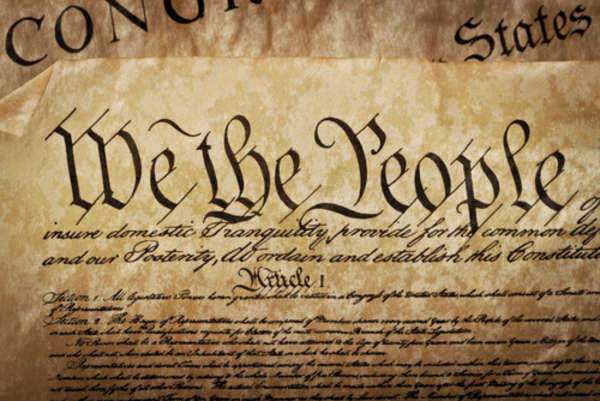
“We, the People” must stand up to the falsehoods,. We must stand up as well to those who not only stand by and compound his lies, but who are rewriting our identity as a nation, day-by-day, Executive Action by action, one falsehood-filled speech after another.   US is the United States of America, and is US – “We, the People.” “We, the People” must call one another, and the rest of our elected officials to account, and we need to act quickly. They represent US.

Thursday, February 9, 2017

Leaving On a Jet Plane (or Not)

[I wrote these words en route from Zurich to Boston a bit over a week ago, but have only gotten to share them now.]

It happens almost every time I board a plane to return home from a trip, be it work-related or leisure.  Each time, from somewhere in the recesses of my mind I hear Peter, Paul & Mary singing John Denver's famed "Leaving on a Jet Plane."  It has been almost 50 years since I first head the song.

Holocaust Memorial - Vienna
Now my wife Laura and I are on a plane, from Zurich to Boston.  Zurich was but the transfer point after our flight from Budapest, Hungary as we closed out an 8-day visit to Vienna and Budapest as part of a Rabbinic Mission to `these two Central European cities.  It was a first visit to both cities for us. The trip, about which I will write at a later point, was eye-opening, informative, and in some ways, inspiring.
Shoes on the Danube Memorial to Murdered Jews

We left the US just two days after the inauguration of our new President.  We’ve watched the early days of this Administration from afar. I found myself reaching for news almost at any pause in our itinerary. Visiting two Central European cities which have dark pasts in Jewish history, learning about that history and how Austria and Hungary deal with their stained past, while watching this new Administration unfold its policies has been shocking.  Learning about totalitarian regimes and their heinous crimes against our Jewish people and others was, at times overwhelming. It brought back memories of my abbreviated visit to Berlin in August. Following the news as the President and his advisors rolled out one Executive order after another, each the fulfillment of a campaign promise, has been disturbing.  None of the actions has been more troubling than the January 27 Executive Order regarding refugees and immigration. 

Learning about the fate of Jewish citizens, immigrants and refugees in Hungary while watching the drama unfold in my own country has been bone-chilling.  Watching the news of the widespread protests was inspiring. It made me sad to be so far away at a time when it is necessary to stand up for our nation's values and character. (I take some comfort in having been able to participate in the Women's March in Boston the day before our departure.)

However, nothing brought home the new reality to which I am returning home than the scene Laura and I witnessed as we boarded our flight in Zurich.  A young girl, likely in her mid-20's was standing at the counter. She was trying to explain to the Swiss Air attendants that she had a proper student visa, permitting her to fly to Boston to start classes at Harvard for her Master's degree.  Another passenger stood by her side.  Clearly a stranger, and possibly an attorney, she was advising the flight attendants that the ban had been stayed by a court in Boston. The student, she argued, must legally be allowed to board the plane.

We were ushered along by the flight attendants. Just moments later, as we took our seats we saw the attorney, tears streaming down her face, coming down the aisle. "They denied her boarding?!?" we asked.  "Yes," she replied.  I thanked her for trying to help the young student whose fate at that counter. Right before our eyes we were brought face-to-face with the new reality to which we are flying home in an all-too-disturbing manner.

While I can feel good about our homecoming after a worthwhile mission with a group of colleagues and spouses, Peter, Paul & Mary's echo in my mind is discomforting on this flight. Too many are being denied the ability to leave on a jet plane opting to the narrow-minded, cold-hearted and brutal machinations of a disorganized and tyrannical President and his henchman. (Now, just over a week later the order has been stayed and our nation awaits a court ruling.)


Our plane departed only a short while ago, but my homecoming feels blemished.  Sure, I am looking forward to sleeping in my own bed and awakening my own home.  I am eager to see my children, and in only a few weeks, God-willing, to the arrival of our first grandchild. There is much to look forward to.  But the scene at the Zurich airport, but an hour ago, tempers my warm feelings. In fact, it underscores the disturbing news reports and images I’ve been watching from afar. My hopes are relatively intact.  My faith in my country is shaken.  May the jetlag be short-lived.  There is too much work to be done before too many of our country’s values and too much of its character are undone by a cold-hearted, dishonest bully, and his close circle of advisors whose reckless management of our nation over but a week-and-a-half has wrecked havoc not only across our nation, but around the globe.

Tuesday, December 13, 2016

Jacob's Dream . . . and Mine

(This post originally appeared in Fresh Day - https://readymag.com/mwm/663887/6/)

It was almost thirty years ago that my colleague and teacher, Rabbi Harry Danizger, of Memphis, with a casual comment, taught me a lesson which remains with me to this day. 

We were chatting about his mother’s recent death and the work of cleaning out her apartment. He quipped, “You know, Eric, we rabbis see everything midrashically.” (Midrash is a form of interpretation developed by the early Rabbis for interpreting Scripture, and even everyday events.) From Harry’s words three decades ago I have found abundant inspiration for sermons and other teachings, not only in the sacred texts of Jewish tradition, but also in the world around me.

Some years later I was dining in a restaurant in Great Barrington, MA, where I spotted a wall festooned with bumper stickers with pithy phrases, and some of historical interest. One bumper sticker caught my eye. It read, “Remember who you wanted to be.” 

A few weeks later, on a summer road trip with my eldest son, I spotted that same bumper sticker on a car in front of me. Rabbi Harry Danziger’s words came rushing back to me. The “coincidence (?!?)” of sighting that bumper sticker twice in a short period of time stuck with me, and that phrase went on to become the cornerstone of my Yom Kippur eve sermon to our congregation just weeks later. 


On the holiest day of our Jewish year, I thought it an appropriate message for a period of introspection and repentance. I even bought hundreds of the bumper stickers to distribute to anyone who wanted one. There’s one on the door of my study at the synagogue, and I still spot some in our parking lot from time to time. “Remember who you wanted to be.” Those words have been marinating in my soul for a long time. 

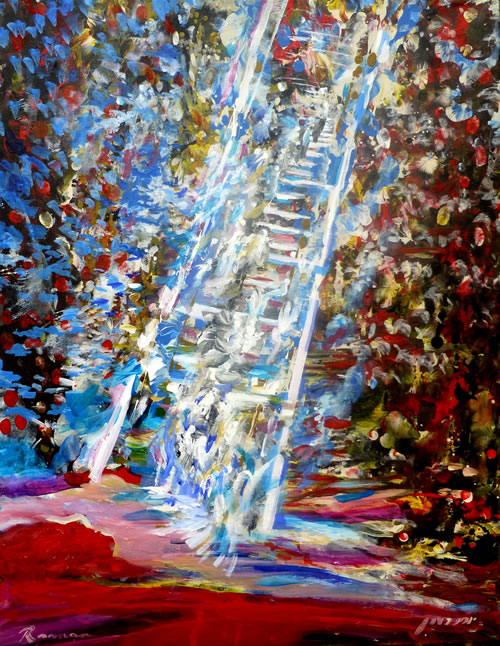
In this past week’s Torah reading from the book of Genesis, we read of our patriarch Jacob’s flight from his family’s home after he has stolen his slightly-older brother Esau’s blessing as the firstborn son. On the first night of his journey to Uncle Laban in Haran, he spends the night in an as-yet unnamed place where, taking a rock for a pillow, he falls asleep. We can only imagine what must have been churning in Jacob’s subconscious. His dream has been the focus of much commentary, art, and debate for millennia. In Genesis 28:12 we read, “He had a dream; a stairway was set on the ground and its top reached to the sky, and angels of God were going up and down on it.” The dream, and God’s message to Jacob in his dreams startles the frightened young man. “Surely God is in this place, and I did not know!” he proclaims.

There are times in our lives when each of us is startled, awakened, challenged to refocus. For me, this year, Jacob’s dream speaks to me the words of that bumper sticker – “Remember who you always wanted to be.” It brought to mind words I spoke in 1977 to the admissions committee for the Rabbinic studies program at the Hebrew Union College-Jewish Institute of Religion, “I passionately want to be a rabbi. I likely will work with youth, or in one of our Jewish educational summer camps, or perhaps on a college campus.” I stated, “I will never serve as a congregational rabbi!” Almost thirty-six years have passed on this rabbinic journey of mine. The only position I have held is as a congregational rabbi. 

Over recent months, “Remember who you always wanted to be” has brought that declaration back to my consciousness. I’m not certain of my journey, certainly not any more than Jacob could have been as he set out from his parent’s home for Haran. In late October I informed the leadership of my congregation, where I have served since the summer of 1999, that I wish to step down as Senior Rabbi. 

In part, I think that bumper sticker’s message, and those dreams of long ago are calling me. I find myself wondering about the final active chapter of this rabbinic career. Like Father Jacob I have decided to set out. (In my case I’m not physically going anywhere as we intend to stay in Boston, and my congregation has graciously asked me to become Rabbi Emeritus.) However, for whatever years remain in my active rabbinate, I’m searching for a new, non-congregational path to serving my people and our broader community. I’m hoping it’s not a fool’s errand. I’m trusting that “God is in this place.” I’m simply listening for a different way to respond to God’s call.