Wednesday, August 17, 2016

An Uncertain Journey - part 1

I approached my trip to Berlin with a mélange of emotions. I was uncertain how I would feel about being in Germany. I was curious how I would feel walking the streets of a city that holds so much dark baggage for the Jewish people. I was curious to explore a place entirely new to me. And I was eager to join rabbinic colleagues in learning about the Syrian refuge crisis from those on the frontline of addressing that crisis in Berlin. While my trip was unexpectedly shortened, the few days I spent in Germany were eye-opening in a number of ways. In my next few posts I will explore some of these, starting with an initial impression from my first visit in Berlin.

Taking advantage of a better airfare, I arrived in Berlin with a day-and-a-half to explore prior to start of our Rabbinic mission. Several years ago, I was introduced to the work of Rick Steves, his guidebooks, blogs, TV show, and for my purpose, his free downloadable podcast walking tours! Having used his resources in other cities, I set out to explore Berlin with his informative, and entertaining company. I spent some 6 or so hours walking around the city, exploring important sites, and getting a decent overview of Berlin.

I’ll not bore you with details. Rather, I begin with a profound impression which, with a week’s distance, I’ve been able to sort through more fully. I’ve often heard from other Jewish visitors to Germany that they found themselves looking at the people on the streets, wondering where they might have been, and what they have been doing during World War II. This only crossed my mind in retrospect. I was struck by the number of times I came face-to-face with monuments, memorials and exhibitions in which Germany accepts responsibility for the darkness of its actions in the 20th century.

Nowhere was this more in evidence than at the Memorial to the Murdered Jews of Europe. As Rick Steves explains, in naming the site as being dedicated to “the Murdered Jews of Europe,” Germany chose to own its actions, and responsibility for those actions, by naming the crime committed by nation and her people during the years leading up and during the War.white-washed at this memorial. At Berlin’s Topography of Terror Memorial and Museum, I witnessed acceptance of the crimes against other groups, also targeted by the Third Reich. These were but two of the many sites at which I found myself noting the openness and directness with which Germany seems to have chosen to deal with the ugly and horrific stains on its past.
 
Even more powerful, as our Rabbinic mission began, it seemed to me that the response to the current refugee crisis cannot be wholly detached from Germany’s crimes in the 20th century. It struck me, and many of my colleagues, that the open embrace and efforts at rescuing these 21st century refugees, fleeing persecution and certain death in their native homeland, must to some degree be viewed against the backdrop of Germany’s crimes against humanity some seven decades ago.

To be sure, the response to the refugee crisis in complicated. It is viewed in different ways across German society. Yet, the juxtaposition of memorials and sites recounting Germany’s horrific policies and deeds in the 1930’s and 40’s seemed to me, to reflect a measure of national self-awareness and an attempt to learn from the country’s past. One case in point as a remaining section of the Berlin Wallon the back of which is displaying a graphic and haunting photo-essay of the current conflict in Syria which tells the stories of many of refugees now seeking asylum in Germany. Reading the refugees’ stories, and visiting the memorials I could not help but reflect on what I was seeing against the backdrop of what is unfolding across our country. My abbreviated time in Berlin, the sites I saw and the stories I heard gave me pause to wonder whether, as Americans, we have learned sufficiently from our own past?

More about the relief efforts and the response of Germans will follow in part 2.
SaveSaveSaveSave
SaveSave

Friday, August 12, 2016

The Power of Words

Bereishit bara Elohim . . . so begins Torah. "In the beginning God created . . ." This first story in Torah revolves around the notion of Creation by fiat - God speaks, and Creation happens. From the very beginning of Torah Jewish tradition teaches us of the power of words.

This theme of the power of words is ever-present throughout Jewish tradition. God's ongoing speech to human beings. Abraham, Moses, the prophets of ancient Israel . . . and down through Rabbinic tradition and into contemporary teachings. Other traditions also place emphasis on the power of words. As children we are taught, "stick and stones may break your bones, but words can never hurt me." Our faith traditions would beg to differ. So would many of us!

This year's Presidential contest is surely the ugliest I can remember in my life as a voter. I've witnessed enough to understand that politics involves ugliness, half-truths, and verbal feints. This year however, we are witness to something beyond the usual political fare of questionable claims and doubtful promises. In today's media we find columns devoted to tracking the truth, or falsehoods of our candidates. They are rated: by a number of “Pinocchio noses;” levels of “pants-on-fire,” and so it goes. Both the Republican and Democratic nominees have challenged relationships with truth and directness. This is not new in Presidential politics.

But this year, we are relearning the Torah's ancient lesson about the power of words with new twists. Yes, both Hillary Clinton and Donald Trump can be accused by the detractors of misusing the power of words in some fashion. But in my eyes and ears, and especially in my kishkes (guts), only Donald Trump raises the stakes of the power of words to a dangerous level.

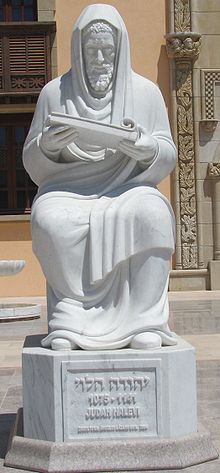
The medieval Jewish philosopher Yehuda HaLevi (Spain, 1086-1145) taught that humans, like other creatures we are chai - "living beings." Yet HaLevi taught that we are something more. We are chai m'dabeyr - "living beings who speak," by which he really means that we are beings capable of rational thought. We are not only capable of rational thought in connection with our speech. We are commanded to speak responsibly. Rabbinic literature and Hasidic tales, indeed, every phase of our Jewish canon contains aphorisms and stories meant to teach us about the power of our words.

The list of Mr. Trump's abuse of words, and the platform he has gained from which to speak those words is truly frightening. Whether it is calling for a heckler in his crowd to be physically harmed; his misogynist language as regards women, and minorities; his outright lies; or even this week's suggestive comments in regard to the Second amendment and how Hillary Clinton or even judges might need to be “taken care of” have pushed the limits. He is out-of-bounds, and if we, in the name of partisan political affiliations allow him to continue, I fear where his irresponsible rantings may lead us. New York Times columnist, Tom Friedman connects what we are witnessing to the political climate in Israel leading up to the assassination of former Israeli Prime Minister Yitzchak Rabin. I am grateful for that particular Friedman' column. As had many friends and colleagues, that thought crossed my mind long before this week's Times' column.

We are living in highly polarized, tense, contentious times. We have already been witness to too much violence in our cities and on our streets. How much longer will we allow Donald Trump to spew his venomous and flammable verbiage? Will we wait until someone actually takes him "at his word" and lights the match that will set our country ablaze?

Now is the time for our leaders in our nation's capital, from both sides of the aisle to lead us out of the shadow of this dangerous volcano of Trump's egotistical, hate-filled, divisive, and dangerous proclamations. If we don't act soon, we will only have ourselves to blame. 

Much is broken in our nation. Much needs fixing. Let's start with this campaign, and then join together to find a path out of the morass in which so many feel we live.

Thursday, August 4, 2016

You Are Going Where???

That’s the response I have heard from a number of folks in reaction to my plans for my first week of vacation. I’ve always tried to include something in my summer plans that will expand me, teach me, and inspire me. I’ve gone to “guitar camp;” Beyond Walls: Spiritual Writing at Kenyon; Kripalu, where I have learned to expand my spiritual repertoire through mindfulness practice and yoga; and of course, Israel. Most of these were not too far outside of my comfort zones - certainly not Israel nor the guitar workshops.

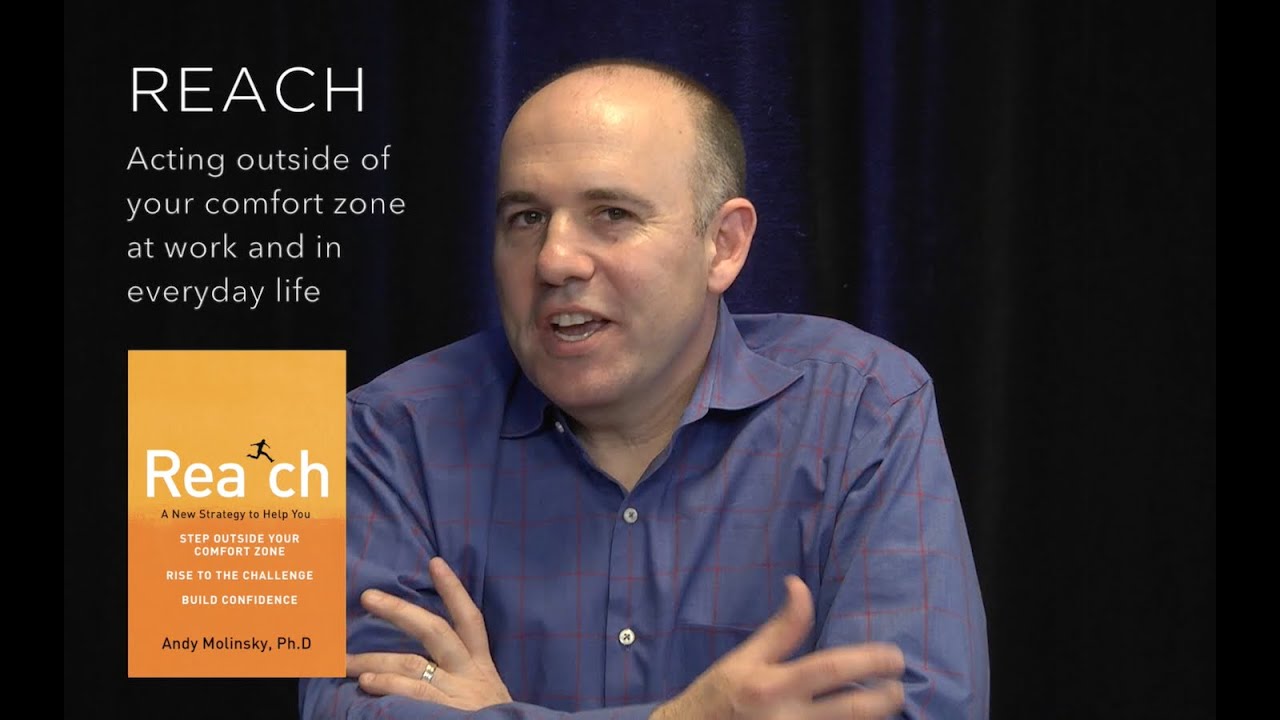
My friend and congregant, Andy Molinsky, who teaches Organizational Behavior at Brandeis University, has been posting a lot about the subject of reaching outside your comfort zone as he prepares to publish his second book, Reach in January. The Kenyon Writing Conference last summer, my first, was a stretch. So too was my initial foray to Kripalu which was really new terrain for me.

This summer offers holds a different kind of “reach.” This weekend I am flying to Berlin, Germany. It’s my first visit in Germany. As a Jew, raised on a healthy dose of Holocaust education, and during the early years of the modern Israel, Germany has felt like a destination that would never find its way onto my bucket list. The years have softened that a bit. The impetus to make this trip now came from a notice I saw this past Spring in the newsletter of the Central Conference of American Rabbis. It noted an August Rabbinic Mission to Berlin. The first, and main purpose of this mission is for
participants to engage with IsraAid, an Israel NGO deeply involved in responding to many humanitarian crises over recent years. IsraAid is very much on the front lines of addressing the large number of Syrian refugees who have made their way to Germany as they flee their war-torn homeland. My colleagues and I are going to see first-hand the work of IsraAid and learn about this humanitarian crisis with our own eyes. A secondary focus of the mission will allow us to engage with members of the Progressive Jewish community in Berlin, our brother and sisters, who have built a vibrant liberal Jewish community in a land once hostile in the extreme to its Jewish residents.

The juxtaposition of traveling to a country and city which holds many challenging images and such
dark history for our people is daunting. At the same time, modern Germany has worked hard to confront its past. Their response to this current humanitarian crisis, not of its own making, is noteworthy. In my eyes it's worthy of investigation. That is why I will spend my first week of vacation on what will undoubtedly be an eye-opening, and emotionally challenging mission. I expect it will also be an inspiring mission. To be sure, the issues of refugees and how our nation should response is complicated It is deeply ingrained in our current political turmoil. I want to go beyond headlines and the position-taking. I want to meet refugees, hear their stories, and see our Israeli brethren's response to this devastating crisis first-hand.

I depart prepared to confront the complexity of Berlin and Germany as a Jew, the brokenness of our world today, our Jewish values, and my own views on what will surely be a roller-coaster ride of emotions. Yes, this is my "reach" for this summer. I find myself curious as to how I will return after all I am about to see, experience and engage.

* * * 

If you’re interested, watch this video which mission participants were sent as part of our preparation for our journey: The Island of Tears

Tuesday, August 2, 2016

Politics & The Wild, Wild West

Many years ago, a senior rabbinic colleague remarked to me, “We Rabbis are handicapped. We see everything through midrashic eyes.” Midrash, that creative form through which the early rabbis taught us to look at texts and the world is one of many contributions of Rabbinic tradition to our human condition and outlook in our lives.


My friend’s comment was very much on my mind one evening last week. I had stepped out of a store in a strip mall near my home. I was minding my own business, heading for my car. As I neared my vehicle, I noted a number of other shoppers had stopped in their tracks, their attention fixed on the rear of the car next to my own. Behind the car was a gentleman who was making something of a ruckus. There was no one in his immediate vicinity. Yet he was waving his arms and wildly gesticulating. I slowly neared my vehicle, as he proclaimed quite loudly, “Everyone loves my T-Shirt. Everyone is noticing my T-shirt. I love my T-shirt.” HIs tone grew angrier as he chanted (Or perhaps I might say, ranted.)

As I drew nearer I noted the message on his tank-top, “Make America Great Again. Donald Trump for President.” Had this gentleman been engaged in a conversation with someone nearby, I might have understood his fervor and the volume. But no one was engaged save for passers-by who’d stopped momentarily to notice. It was hard to miss. A few moments later, he closed the hatchback, and climbed into his car. I headed for my vehicle and drove off. I was struck by what I had witnessed. I couldn’t help but wonder about his intent. To be sure, we are living in a chaotic, noisy, polarized time. Passionate exchanges abound. There’s plenty of shouting and wild gesticulation. But this gentleman was broadcasting to nobody and to everybody. He was not engaged in a debate or conversation. He was calling attention to himself - and obviously, to his point-of-view.

Hardly a day passes without a conversation about how nervous folks are about the political and uncivil climate across our country. It plays out on many levels: racial relations, economic inequality, class divisions, geographic divisions, and certainly along political lines. As I drove away, I wondered: Are our political leaders giving sanction to such displays? Politics will always be noisy and constructed around conflict. I wonder whether, in this round, our leaders and their handlers have unleashed waves of anger, and sanctioned a Wild, Wild West atmosphere. What will it take to harness all the raw emotion and unfettered self-expression across our nation so that the fabric of our society — hopefully a civil society - won’t be torn beyond repair?

I can’t answer for the gentleman who clearly loves his T-shirt and the message it bears. I can, and must answer for myself, each and every day in the ways in which I conduct myself and interact with those around me. So must each of us. I would hope that our leaders, our candidates, and their managers would do the same.

I still can dream, can’t I?

Thursday, July 28, 2016

A Wondering Jew: Musings from Newton: How Much Will We Allow?

A Wondering Jew: Musings from Newton: How Much Will We Allow?: (NOTE: This is an adaptation of a piece I posted on my synagogue blog about 6 weeks ago) I’ve been thinking back to my earliest days a...

How Much Will We Allow?


Hangman 05
(NOTE: This is an adaptation of a piece I posted on my synagogue blog about 6 weeks ago)

I’ve been thinking back to my earliest days as a congregational rabbi over the course of this spring and summer. I was a Student Assistant Rabbi, working in a New York City congregation as I completed my final two years of seminary. One of my responsibilities was as the lead teacher for our Confirmation Class (a responsibility I still love over 35 years later.) I recall that at one  end-of-the-year celebration my students kidded me about my use (overuse?) of trigger films in provoking our discussions. It’s true. I found then, and still do find on occasion, that a short trigger film can draw a group into a lively discussion in a relatively short period of time. Over those early years I developed a “playlist” of standards. I know see it as sort of a pre-MTV era teaching tool.

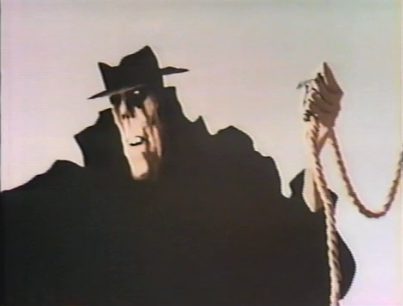
One such film I used almost annually was an animated treatment of Maurice Ogden’s haunting poem, “The Hangman.” It quickly sets an eerie scene:

Into our town the Hangman came.
Smelling of gold and blood and flame-
And he paced our bricks with a diffident air
And build his frame on the courthouse square.
The scaffold stood by the courthouse side.
Only as wide as the door was wide;
A frame as tall, or little more,
Than the capping sill of the courthouse door.
And we wondered, whenever we had the time,
Who the criminal, what the crime,
That Hangman judged with the yellow twist
Of knotted hemp in his busy fist.

And innocent though we were, with dread
We passed these eyes of buckshot lead;
Till one cried: "Hangman, who is he
For whom you raise the gallows-tree?"
Then a twinkle grew in the buckshot eye,
And he gave us a riddle instead of reply"
"He who serves me best," said he,

"Shall earn the rope on the gallows-tree."

The poem wends its way through a narrative, which by its end, has seen the total destruction of a community as its members are hung one by one; group by group. By poem’s the scene is nearly desolate save for one lone survivor, to whom The Hangman turns.
Then through the town the Hangman came 
And called in the empty streets my name- 
And I looked at the gallows soaring tall 
And thought: "There is no one left at all 
For hanging, and so he calls to me 
To help pull down the gallows-tree." 
And I went out with right good hope 
To the Hangman's tree and the Hangman's rope. 

He smiled at me as I came down 
To the courthouse square through the silent town 
And supple and stretched in his busy hand 
Was the yellow twist of the hempen strand. 
And he whistled his tune as he tried the trap 
And it sprang down with a ready snap- 
And then with a smile of awful command 
He laid his hand upon my hand. 

"You tricked me, Hangman!" I shouted then, 
"That your scaffold was built for other men 
... And I no henchman of yours,
" I cried, "You lied to me, Hangman, foully lied!" 
Then a twinkle grew in the buckshot eye: 
"Lied to you? Tricked you?" he said, 
"Not I, For I answered straight and I told you true: 
The scaffold was raised for none but you. 
"For who has served me more faithfully 
Than you with your coward's hope? Said he, 
"And where are the others that might have stood 
Side by your side in the common good?" 
"Dead," I whispered; and amiably "Murdered," the Hangman corrected me;
"First the alien, then the Jew . . . 
I did no more than you let me do." 

I’ve been thinking back to Ogden’s haunting piece a lot in recent days . . . We are moving past this summer's political confabs. After Labor Day the campaign will intensify in earnest. This has been a deeply disturbing campaign for way too many months now. Rather than a passionate and complicated debate over the critical issues our nation faces, and those we face as the world’s leading superpower, this 2016 campaign has been nasty in disturbing ways unsurpassed in my memory. It’s as if we, as a nation, are being dragged through sewers and gutters; bombarded with ugly name-calling and ferocious character-assassination. Fingers are pointed every which way across our nation, within the two major parties; across the bow from one party towards the other; and from many quarters at the media. So much of what is playing out before our eyes, and assaulting our ears is diversion. Rather than discuss real issues, policy proposals, and how we will forge a path forward as one nation, when this is all over, our attention is drawn to ugly diversions. Personally, I fault all of the above - the candidates, the party leaders, and so many in the media, in all its myriad manifestations. 
How did we come to this? A riff on the Hangman’s words to his final victim, for whom there was no one left to turn, echoes loudly in my ears: “They have done no more than we’ve let them do!” The name-calling, the side show acts, the broadside swipes at whole ethnic, racial and religious groups . . . it all acts as a lightning rod. And the media, in large part, makes certain that the lightning strikes so we are paying attention. There is blame enough to go around for the circus that is passing for a campaign for the highest office in our nation. 
We, too, own some of it. For, “they are doing no more than we allow them to do.” I pray that as as a nation will pull back from the fray and regain some sense of individual and collective perspective. We are better than this as a nation. We must demand better than this from our candidates, our already-elected officials, our media . . . and ourselves. If we do not, we may be left to wonder how we came to a devastation metaphorically portrayed by Ogden in his poem. I urge you to read it in its entirety! 

Click here to read "The Hangman" 

Clink here to watch the 1964 video of "The Hangman"   

Friday, July 22, 2016

The Bully Pulpit, part 2

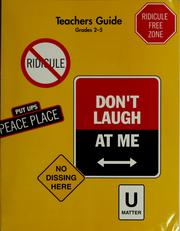
Anyone who knows me well, knows I love folk music. It was sometime around 2004, when I first heard a new recording by Peter, Paul and Mary of a song entitled, Don’t Laugh At Me. The first time I heard it, I was sitting quietly in my living room and listening to PP&M’s then new album. Don’t Laugh at Me came on and I found myself almost immediately reduced to tears. I must have hit replay a good ten times in a row. I searched for the composer online, wrote to him, and soon had the lyrics and guitar chords as I hastened to learn the song.

I believed it would be a powerful song to bring to camp. I love those delicious evenings when I am invited to come to a bunk at bedtime to sing some songs as “cabin prayers.” I also brought the song to attention of my wife, Laura, who at the time directed the camp’s educational program. The following summer, she arranged for Peter Yarrow to visit camp, to teach the song and talk about Don’t Laugh at Me.By then, and entire anti-bullying campaign, Operation Respect, had taken root, in part, inspired by the song. Don’t Laugh at Me has been translated into numerous languages and the curriculum and campaign have taken root around the world. When I first heard the Israeli-Palestinian version, I was again reduced to tears.

The song has been very much on my mind in recent months, as I follow our national political discourse. Over and over again, I find myself wondering how much impact projects like Operation Respect or The Bully Project can have so long as leaders on our national, state or local levels display the very behaviors we, our schools, and our faith communities are trying to teach our children.

I have been quite impressed with how the anti-bullying message has been integrated into the very fabric of our URJ Camps over the past decade or so. Our schools are working hard to create communities where healthy self-esteem and skills for constructive disagreement are learned and lived. Wouldn’t it be refreshing if our political discourse could lead, rather than undermine these efforts?

How can we help our candidates and leaders understand that what they say leaves an imprint on the hearts and minds not only of prospective voters, but also on the hearts and minds of millions of young children who we are raising as the coming generations who will guide our nation? You want to ascend to President Teddy Roosevelt’s “Bully Pulpit?” The path is not through being a bully, bigot, or divider.

>

As we traverse the space between our two national parties’ nominating conventions I urge us all to take a few minutes to listen to Don’t Laugh at Me and reflect on its message. I fully understand that politics can be messy and chaotic. I cannot accept bullying, denigration, bigotry, hatred, religious intolerance, anti-Semitism, racism, and any of the other forms of divisive language pouring forth as a path to living our nation’s ideals. All of us, created b’tzelem Elohim, in the”image of God” are precious beings. We will be great when we embody that as we work together to heal our fractured society and our broken world.