Monday, July 24, 2017

The Ache in My Heart

It has been nice coming home - to the US, to Massachusetts, to the Eisner Camp community, and most especially, home to my family. My three plus weeks in Europe and Israel were terrific. But it’s a long time to be away.
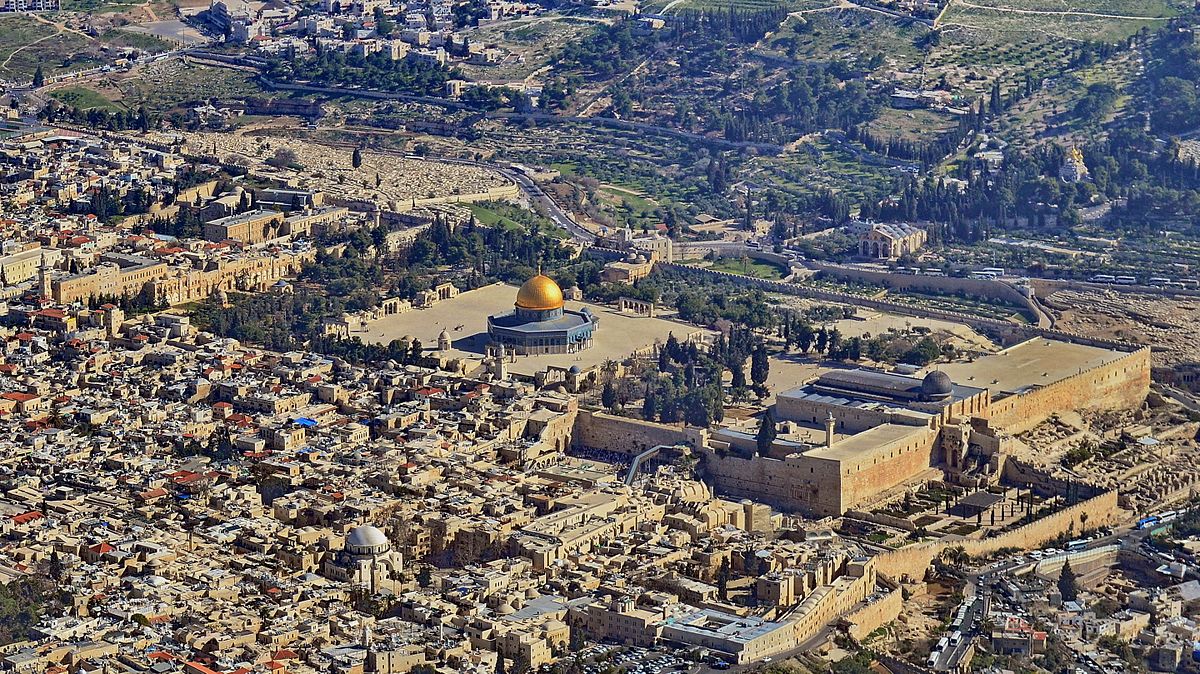
Yet, even in coming home, there is some unsettling in my heart and soul. I left Jerusalem and Israel just days after the events at the Temple Mount in Jerusalem’s Old City erupted. Now, a bit over a week later, I find myself anxiously reading the news from Israel. As happy as I am to be home, I also feel a little like I’ve abandoned my friends and family in the cauldron that is Jerusalem in these days.  In my final days in Jerusalem I could feel the tension rising.  My apartment-mate, Rabbi Howard Jaffe, and I heeded the warnings to avoid the Old City. We’d planned a visit for our final days but understood that the authorities were eager to keep anyone who did not “need” to be there away. For both of us this was likely our first time in Jerusalem without even a brief visit to the Old City.

Now I watch from a distance and my heart aches. The precipitating incident, in which three Israeli Arabs charged out of the Temple Mount complex guns blazing, and their murder of two Israeli Police officers was horrific. For Israeli security forces to pursue the attackers should make sense in any civilized society. The subsequent decision, to place metal detectors at the entrance to the plateau, sacred to both Jews and Muslims, seemed sensible. But it is not uncommon for the seemingly sensible to make no sense in the volatility of the Middle East. One colleague left Israel to travel with his family in Italy before returning home. In a post on Facebook a few days later he captured a bit of the irony and complexity of making sense in a perplexing place: “A little reminder to my cousins protesting on the Temple Mount. (I’m) visiting the Vatican today. They have 4 Million visitors every year. Each one passes through a metal detector. Each one.” Additional security in the aftermath of a terrorist attack might seem sensible. But Jerusalem and its Holy sites may be exempt from sensibility. It’s hard to listen to a seeming lack of perspective about security needs at that holy site. But I am watching from my perspective, a Jewish, pro-Israel perspective.

Since my return I have been engrossed in reading my teacher, Micah Goodman’s newest book, Milkud-67. In English, this translates as “Catch 67.” I first heard Micah address the topic with the group I brought to the Hartman Institute in December during our Israel trip. I heard him speak at greater length in Jerusalem a few weeks ago. I set myself the goal of reading his book once home - an exercise in both expanding my Hebrew skills and reading this important addition to the ongoing debate over Israel-Palestine and the future in that tense region. Just this morning, I was reading Micah’s analysis of the conflict through the prism of early Zionist history. Though in this morning’s chapter he was only discussing the divides in the Israeli community, in his "Introduction" he makes it clear that he sees divides on both sides of the conflict.

Sadly the events of the past 10 days have thrown the conflict into a more complicated and fragile state. The precipitating act was one of violence initiated by Arabs against Israeli police officers (who ironically were Druze - a cognate faith group related to Islam.) Yet, the outcry from the Palestinian leadership, and Arab leaders more broadly, seems to ignore that fact. The silence from Palestinian and other Arab leaders about the heinous attack on a family sitting to Shabbat dinner in their home this past Friday night is also difficult to comprehend.  Furthermore, it is also a sad commentary on the state of affairs in our own country, that our president seems to be oblivious to the events of the past ten days. While the Administration is involved, I still want to believe that we can expect moral leadership in the face of world events from our top leader.

Daily I pray that the spiral of events can be brought under control. No one in that fragile place needs the sacrifice of more blood and lives. While I do not presume to have “the answer” to this current violent episode, I pray that the leaders - on all sides will bring the best of their thinking and leadership to calming the city, the region, and the peoples who share it.  In the meantime, my heart aches and breaks as events continue to spiral. While I am thrilled be at home with my family, there is a part of me keenly focused on where I have been.
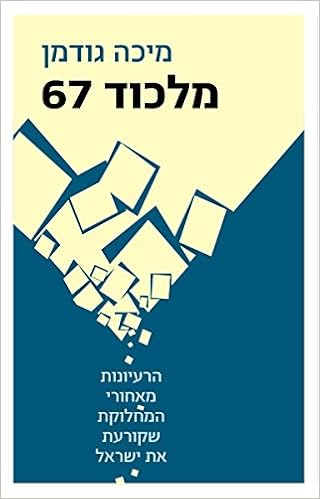
Micah Goodman writes in the Introduction to Catch-67, our Rabbis teach that “Torah scholars increase the peace in the world.”  He notes, that they are not meant to create that peace, but through their actions, to increase it. Micah writes that it may be time to give up on the notion of complete peace and focus on how we increase peace. May all who so desperately need greater peace find it – through the actions of our leaders, through their own individual actions, and through what I continue to pray will be a more broadly held commitment to increasing the peace.

Friday, July 21, 2017

Taking a Walk

“I want you to go for a walk with someone you wish could be at your side.”  That was the instruction. It was Day 3, maybe 4, of my week at Kripalu with Jack Kornfield in January 2014. I’d been struggling with this notion of "Walking Meditation."  Each day had been a blend of teaching mixed with various forms and durations of meditation. As instructed, at various points each day, I walked the hallways of the main building at Kripalu. The ground outside was frozen, covered in snow and ice.  Most of us chose to do our Walking Meditation in the hallways. Each time we were sent forth to walk, I set out anew, trying hard to lower my gaze, focus on my breath and to keep my balance all at the same time. Each dose of Walking Meditation was a struggle.  The sitting practice was fine.  As the week went along, I was, more often than not, “in the zone.”  But the Walking was challenging. Now you want me to share the walk with another!?!  “It can be someone you knew, someone you would like to be with.  It can be an historical figure you wish you had met. Go, take a walk.”

I returned to the hallway and set out. With whom would I share this walk? Step, breath, where’s the wall? Am I too close to the person walking in front of me?  It seemed just like the same challenging walk of the days before. Suddenly, I felt a presence.  Something in me had summoned Rabbi Hillel.  I’m not sure why. I'd been hearing stories about this larger-than-life first century Rabbi since childhood.  And I’ve been telling some of those same stories during over the years I’ve served as a rabbi. Okay, I’m walking. I’m breathing. And it seems I am not alone. I figured as long as we were walking together, I should ask some questions.  Frankly I don’t really remember what they were. I only know that having Rabbi Hillel by my side seemed to make the walking easier.  Was that it?  Did I need an “imaginary friend,” a companion to divert my attention from the mechanics to help it make sense?  I still don’t know.  Yet, along we walked, down and back, down and back.  One aspect of that week of meditation was that it helped me be less conscious of time. I found I was more focused on my breath and letting my thoughts “pass like clouds in the sky.”  Maybe the old salt is true, “practice makes . . .”  No, not perfect, but better.

After decades of studying Jewish tradition, I felt privileged, as if I had actually been granted an audience with a major figure of this tradition which is so precious to me. Then it happened. Something shifted. I could not understand how, or why.  I only remember that suddenly Rabbi Hillel was no longer by my side. I wasn’t sure whether he had fallen a few steps behind, or whether he gone off to grab some coffee downstairs.  Yet, I was still not alone.  Another Rabbi, another cherished teacher had taken Hillel’s place.  It took a few moments. Then I realized I was now walking alongside my cherished teacher, Rabbi David Hartman z”l.  I knew in my gut that Reb Dovid, as we called him, could not really be at my side. He’d died 11 months earlier. Was it really any more fantastic to imagine Hillel at my side who’d died two millennia ago, than someone who I actually knew and had only been dead not quite a year? Step, breath, balance . . . step, breath, balance. Having found some level of comfort I was determined to keep going as long as I could. Or at least until the bell rang for us to return to the main hall.

Walking with Reb Dovid was different from walking with Rabbi Hillel. With Rabbi Hillel I asked the questions. Reb Dovid was a different story.  I guess I knew that would be the case once I noticed him. I'd first heard Rabbi David Hartman speak sometime in the Spring of 1977. I remember little of what he said, but I can conjure that moment and the impression he'd made on me. Fast-forward to Summer 2004.  I'd come to Israel to spend two weeks at the Shalom Hartman Institute as part of their annual Rabbinic Torah Seminar. Who should turn out to be the elder statesman of the Institute? Rabbi David Hartman. I’d heard his name over the years.  I'd read some of his books.  But here he was. We both looked 30 years older.  But his passion and dynamism took me right back to the stadium at K’far Maccabee.

A few years later I was invited to participate in the Institute’s more intensive 3-year Rabbinic Leadership Initiative. At K’far Maccabee I sat amongst thousands. At the Summer Rabbinic  Seminars I have sat amongst 150-200 rabbinic colleagues. Now I was suddenly one of 27 rabbis sitting at Reb Dovid’s feet, where we relished sitting over the three years of our RLI experience.  To be sure, those years brought me face-to-face with some of the most influential and impactful teachers with whom I have ever studied. Though he was increasingly in failing health, Reb Dovid was, nonetheless, still the elder statesman of this Institute he'd founded in his father’s memory in the late 1970s. Sadly, Reb Dovid died just days after our group left Jerusalem following our third and final Winter session at the Institute.  The following summer would mark our graduation from the program. He would not be there as we marked our transition to a different place in the life of the Institute which would now and forever be different for the absence of its founder and elder statesman, Rabbi David Hartman z”l.

And there I was in  January 2014, walking the halls of Kripalu, with my teacher, Reb Dovid by my side. I don’t know if he pushed Hillel aside, or if Hillel invited him to take a turn. I do know, the dynamic of my walking meditation experience changed. I was no longer asking the questions.  It was Reb Dovid’s turn, and he really only had one question for me. “Eric,” he began. I was never quite sure he even knew my name. But walking down that hall he certainly knew who I was. “Eric, what’s your Torah?”  “Excuse me, Reb Dovid?” I asked. I wasn’t sure if I had heard him correctly. I was so conscious, not only of his presence, but also of my breathing, my gaze and my steps.  I certainly did not want to stumble and fall against my elderly teacher, whose own walking was not all that stable.  “Eric,” he repeated.  “What’s your Torah?”  “What’s my Torah?” I echoed.  I opened my mouth and began to answer.  At least I think I did. Then suddenly someone gently struck the meditation bell signaling that it was time to return to the Great Hall, to our cushions, and to our learning with Jack Kornfield.

“What’s my Torah Reb Dovid?”  If I’m honest with myself, I have spent over 34 years as a rabbi wrestling with that question. But that day at Kripalu, I really felt my teacher asking me. I don’t know if we will ever have the chance to walk together again. But whenever and wherever I walk, whenever and wherever I teach, you are with me. You are with me, along with all the the incredible, dynamic teachers you allowed me to meet and learn with, including your son Donniel.  Indeed I'd practically forgotten about that day until just a week ago, at this summer's Rabbinic Seminar, Donniel asked us all, "What's your Torah?" That walk came right back to me. You are all a part of the Torah I am forming into words as my Torah. I only pray that as my journey takes a new pivot the Holy One grants me the time to make sense of it, that I might share it with others with one percent of the passion, intellect and soul with which you, my teachers, have shared your Torah with us!


Sunday, July 16, 2017

From Zeal to Zealotry


In the opening of yesterday’s Torah portion, Parshat Pinchas, we read: “The Eternal spoke to Moses, saying, “Pinchas, son of Eleazar son of Aaron the priest, has turned back My wrath from the Israelites by displaying among them his passion for Me, so that I did not wipe out the Israelite people in My passion. Say, therefore, ‘I grant him My pact of friendship. It shall be for him and his descendants after him a pact of priesthood for all time, because he took impassioned action for his God, thus making expiation for the Israelites.’ ” (Num. 25:10-13)

This passage has long puzzled commentators.  The Torah states that Pinchas is rewarded with Brit shalom – God’s eternal covenant of peace (which JPS translates as “pact of friendship”).  Some see in Pinchas’ actions bravery, courage and valor.  Others see it as an act of zealotry, in which Pinchas arrogated to himself the role of judge, jury and executioner as he killed the Israelite Zimri, and his Midianite consort, Cozbi. As the highly regarded medieval French commentator Rashi often says, “this passage cries out – darshaini – “Explain me!”

I was reminded of this passage more than once over the two weeks since I arrived in Israel. No matter which way Pinchas’ actions are read, for good or as an act of arrogance, they are always linked with the concept of zeal, or zealotry. One dictionary defines zeal as “fervor for a person, cause, or object.” Zealotry as “fanatical and uncompromising pursuit of religious, political, or other ideals; fanaticism.”  I suppose that one’s view will almost always be based on one’s perspective or views.

I believe that we have seen more than a few examples of abundant zeal, and even zealotry in recent weeks.  I’ll mention just two.  I’m not equating them per se. I offer these two as a reminder that zealotry comes in different forms.  (I could easily select other examples from home in the US.) The first follows upon actions taken by Israeli Prime Minister Netanyahu in cancelling the agreement from nearly 18 months ago wherein a compromise was struck regarding access to the Kotel (Western Wall) for Jewish streams from across the spectrum, from liberal to orthodox.  In face of a threat by his Ultra-Orthodox coalition partners to leave the government and thereby cause it’s collapse, Netanyahu cancelled the agreement. Coincident with that decision, leaders of the Haredi community pushed forward with a bill to change Israeli law as regards conversion to Judaism. There has been a ramping up of denouncements of Reform and Conservatives from haredi leaders. A week or so ago a “Black List” of Diaspora Rabbis, compiled by the office of Israel’s Chief Rabbi from around the globe was published. Some of my colleagues have taken umbrage that they were not included on the list. Others have declared the list meaningless. Virtually all of us see these actions as a form of religious zealotry in which the Ultra-Orthodox community here in Israel is attempting to consolidate its political clout and arrogate to themselves all decisions as regard all Jews, wherever they may live. This string of pronouncements and acts have driven a deep wedge into the heart of our Jewish people. How we step back from this precipice, or can we do so, remains to be seen. In spite of the cause, and potential outcome as regards the Kotel and the Conversion bill, I do take some comfort that an unusually broad coalition of Jewish organizations, who often find themselves at odds, have in this instance aligned to prevent this from going any further.

Zeal and zealotry are hardly limited to the realm of words and pronouncements.  This past Friday, like the Israelis around me  I was stunned to learn of the horrific events in and around the Temple Mount in Jerusalem’s Old City.  Three Arab-Israeli cousins from the Israeli-Arab village of Umm al-Fahm, burst out of the Temple Mount complex guns blazing. They killed two Israeli Border Police officers and wounded another. Israeli police officers responded quickly and ultimately cornered and killed the attackers who’d fled back into the Temple Mount complex from which they launched their attack in the first place.  The initial terrorist act has rattled Israelis – Jews and many Arabs.  There is an uneasy pall today as the Temple Mount complex will be reopened for Muslim worshippers.  I’ll leave the varying responses from Israel’s Arab neighbors, the Arab League and others aside for this moment. Certainly we can debate what caused these three young men to act as they did. But what they did was an act of terrorism. The Israeli police below the Temple Mount complex were doing their job in responding to their attack. There seems to be some evidence that the three Arab cousins sought to ignite a broader Middle Eastern conflict by their actions. There is can be no question that this awful chapter was set in motion by the zealotry of three cousins from an Israeli-Arab city.  These were not attackers from beyond Israel’s borders but rather Israeli-Arab citizens.  Only time will tell whether Israeli, Palestinian and other leaders can calm the waters and use this moment as a possible opening to addressing the ongoing grievances of both sides, or if a new round of violence is about to erupt. I pray for peace and calm with leadership on all sides.

Zeal and zealotry have been a part of the human behavioral and attitudinal repertoire for a long time. Yesterday’s Torah reading is a reminder of that.  Be it the Ultra-Orthodox Rabbis here in Israel, young Arab men from an Israeli-Arab town, or even political leaders here in in Israel or back home in the US, there must be a way to channel passions so they do not cross the line from zeal to zealotry.


One last note:  Commenting on Pinchas’ act, my colleague Rabbi Micky Boyden from Hod HaSharon here in Israel, responding to recents events notes: On the face of it, Pinchas is awarded with "a covenant of peace" (b'rit shalom) for his act of religious zealotry. However,” in the Babylonian Talmud, “Rav Nachman points out that the Vav in the word "shalom" is broken in the middle because Pinchas was not shalem (whole) but chasseyr (lacking). The same can be said of Israel's religious and political establishment, but our love of Israel is not conditional upon their behavior.”

In the aftermath of these recent weeks, we as a people are not shaleym – we are not whole. That’s not exactly new. But we need to find a way towards a great sense of wholeness with and in regard to one another – as a Jewish people, as co-inhabitants of this fragile planet, and its nations.


Wednesday, July 12, 2017

A Breath of Fresh Air

It had been almost two weeks since I’d left home. My anticipation had been building towards my first Shabbat in Jerusalem in quite a while. With only one Jerusalem-based Shabbat this time I felt my choices weighing on me. Where to go? In which worship community should I place myself in order for my soul and spirit to be nourished.  I miss the days when my summer Jerusalem stays included three or even four Shabbatot.  Then I could float around to various synagogues and communities, as if I were at a buffet.  Rather than gorging myself on just one taste sensation, I could mix it up.

Last Friday night I chose to return to Zion, a congregation I'd only visited once before. It was in Summer 2014 that I’d heard the buzz about Zion.  Friends told me, “it’s warm and the singing is incredible.” In the interim, I've become a supporter of this community and even shared copies of their recent CD which features many of the melodies which have been composed for the congregation.

In the days leading up to last Friday friends suggested that Zion would be mobbed – it was.  Some warned me it would be stiflingly hot – it was not.  I arrived about 15 minutes into the singing. With not one empty seat in the hall I stood on steps for about 30 minutes until a seat did open up.  Seated, I found myself able to close my eyes, and focus on my breath and the community’s voice. It was a powerful worship experience, as were the messages shared at strategic points in the worship by a member of the congregation, the community’s Rabbi, Tamar Elad-Applebaum, and a rabbi visiting from California. For me, one pivotal moment came as we were singing the traditional Kabbalat Shabbat piyyut (liturgical poem), L’cha Dodi. The poem was written by Rabbi Shlomo Alkabetz, one of the pillars of the Kabbalistic (Jewish mystical) community situated in 16th century Tzfat. It is custom in synagogues around the world that for the final stanza the congregation rises and faces the entrance, symbolically welcoming Shabbat HaMalka (the Sabbath Bride) into the midst of a community ready to fully enter Shabbat. As we stood and turned I felt a sudden rush of air pouring through the open windows. It was refreshing. It was invigorating.  Coupled with the exuberant sound of the community singing powerfully, I could not help but feel as if that rush of air was the Sabbath Bride herself entering and greeting each one of us in the room. As I left  a short while later, making my way to the home where I’d been invited to Shabbat dinner, I felt light and buoyant.  A spirit was carrying me from worship to dinner.

Shabbat morning found me at another synagogue I love to visit when I am in Jerusalem. I was first introduced to Shira Chadasha (“a New Song”) in 2004.  Now, I try to make it to this community at least once whenever I am in Jerusalem. Shira Chadasha meets in a community center in Jerusalem’s German Colony.  They have no rabbi, or other staff as far as I can tell.  They gather on Shabbat and Holy Days for worship, as well as at points during the week for study. I can truly say that Shira Chadasha is the Orthodox congregation in which I have felt most comfortable in all my years of worshipping in such settings. Both men and women take part in leading the worship, carrying and chanting from the Torah, and delivering the week’s D’var Torah (homiletical interpretation of the week’s Torah reading.)   The singing is invigorating, and the community is welcoming, even to those of us who only visit when we are in town.
As this week’s end approaches Shabbat is again on the horizon. I eagerly looking forward to welcoming Shabbat at the Port of Tel Aviv with Beyt Tefillah Yisraeli.  I have been attending their Shabbat evening services for many years – in the summer months on the Promenade in the port; and otherwise at a nearby community center.  When Beyt Tefillah gathers in the Port, it’s not uncommon for there to be between 700-1000 folks who join the gathering. The last summer I spent here, 2014, due to the War with Gaza, and the countless missile launchings from Gaza large public gatherings were prohibited.  I am eager to see this tapestry of Israelis and others gathering to joyous celebrate lie, its blessings, and Shabbat in its outdoor setting.

Set against the backdrop of tensions surrounding the Kotel (the Western Wall) and the proposed change in the Conversion Law (about which I will write in the days ahead) the spirit and vitality I find in these, and other uniquely Israeli communities is inspiring. Worshipping in these unique Israeli congregations, I find a sense of the thirst of Israelis who do not wish to be forced into worship experiences that do not speak to them.  Rather than simply staying away, there are a growing number of Israelis and Israeli congregations exploring and expressing their Jewish identity in ways that speak to them.

Maybe it was the Sabbath Bride’s gust I felt last Shabbat at Zion.  Or maybe it was the fresh air that is coursing through ever-growing segments of Israel’s Jewish communities. Either way, it felt good!

Keyn yirbu – May they continue to increase.


Monday, July 3, 2017

Today

At the remains of the Mila 18 bunker 
What a difference a day makes! Right?

Yesterday, the NFTYites and I awoke in a chilly, rainy Warsaw. We spent a full day visiting important sites and learning about the history of Warsaw’s Jewish community and the Warsaw Ghetto Uprising.  Along with a new friend, I was also treated to some sites then group did not visit, including the main Synagogue in Warsaw. At day’s end we headed off to the airport for our overnight flight to Israel.  This morning we arrived in a hot and humid Israel.

Before leaving the Warsaw, I sat with another of the Eisner groups to listen in as they unpacked, not only their visit to Warsaw, but their entire Eastern European experience.  Yet again I found myself deeply touched and inspired by their words.  They reflected on Prague and Terezin, Krakow, Auschwitz-Birkenau, and the many stories of horror and courage they heard along the way. They recalled specific moments and they remembered stories they’d heard. One young man called the experience “humbling.”  I dare say that few, if any, among the 79 Eisner participants, not to mention the other 140 others in our larger contingent left Eastern Europe the same people they were just a week ago when we touched down at the Prague Airport.

Over the final days of our visit, especially while we were at Auschwitz-Birkenau, I found myself recalling a poem by Avraham Shlonsky which was in the Gates of Prayer as a part of the liturgy for Yom HaShoah. It’s called “The Oath” --

In the presence of eyes
which witnessed the slaughter, 
which saw the oppression the heart could not bear, 
and as witness the heart that once taught compassion 
until the days came to pass 
that crushed human feeling. 
I have taken an oath: 
To remember it all, 
to remember, not once to forget! 
Forget not one thing to the last generation 
when the degradation shall cease, 
to the last, to its ending, 
when the rod of instruction shall have come to conclusion. 

An oath: 
Not in vain passed over 
The night of the terror. 
An oath: 
No morning shall see me
At flesh-pots again. 
An oath: 
Lest from this we learned nothing.

I had wished I’d had those words at our closing Tekes (ceremony) at Auschwitz-Birkenau. I was only able to recall the ending, which I shared.  I have little doubt that the young people with whom I had the privilege to share this pilgrimage will not forget what they have seen and learned.  Surely facts and details will slip from memory. Yet, I have faith that their hearts and souls, as well as their identity as Jews, committed Jews, has been deepened.  I pray that they – and I – will not only remember, but will weave what we have learned into the fabric of our lives, “lest from this we learned nothing.”

Today, my young friends are resting near Tel Aviv. I am sitting in one of my favorite cafes in Jerusalem as I await the start of my ten days of study at the Shalom Hartman Institute with some 150 rabbinic colleagues and some of the most important teachers I have ever had.  Tomorrow, our studies will plunge us into Israeli and Jewish history – and unavoidably the conflicts which are erupting all around our people, both here in Israel and at home in North America.  There’s so much work to do.  That’s for tomorrow and the days to come.

Today I sit and process the past week. As Miles Stern, an Eisner participant from my home congregation put it in our closing circle: The question we must ask ourselves is, “what impact has this experience had on how we see the Holocaust?” It was a magnificent reframe of the question put to our teens. Indeed, how has this experience impacted these young people – and I ask myself as well.  As I shared with the group, the answer lies partly in how that impact and that answer guides us as we live in this complicated world.

Tomorrow will come. Today, as it was a few days, ago I am feeling uplifted and hopeful from the time I spent with these magnificent young people. I am especially grateful to have shared this experience with many young people I have shared other experiences with over the years at camp. (I hope to see many of them back at camp on Yom Olim in August – if not on Jerusalem’s pedestrian mall at the end of Shabbat later this week.) For today, I send them the sweetest of wishes for the adventures that lie ahead as they travel Israel over the coming four weeks.


Thursday, June 29, 2017

Tomorrow

June 25th at JFK
I spent this evening with a group of nearly 40 Eisner Camp teens and their counselors, as we prepared for tomorrow’s visit to Auschwitz-Birkenau.  I was profoundly moved by tonight’s conversations: first about pictures, facts and quotes related to the Holocaust; and ultimately by the profound sensitivity, thought and feelings expressed as we went around the circle sharing whatever each person wished to share. We sat together, on the eve of what I can only imagine will be a profoundly moving, disturbing and unforgettable visit.  As Mai, the senior group leader told the teens, “Later this summer we will visit what is often called the lowest place on earth, the Dead Sea. But,” Mai explained, “I think tomorrow we will visit the lowest place on earth.”

I shared with the group that I have been anticipating this day for longer than any of them, staff included, have been alive. I explained that tomorrow’s visit is particularly meaningful for me for two reasons beyond the visit itself. The first is the reality that all four of my own children have been to Auschwitz-Birkenau on trips with NFTY and their Eisner friends. Two of my children have visited twice.  For as much as I have studied, read and taught about the Shoah, I have been unable to fully understand what my own children shared with me and their mother following their visits.  Tomorrow I will be able to speak with my children about our experiences and reactions in an entirely new light.

The second reason is because of the roles that Eisner Camp and my own NFTY experiences played in my decision to pursue the rabbinate. I shared with them that I am honored, and even comforted, to be making this visit with this group of Eisner Camp travelers. I have known many of these young people over the years as I have been a member of the Eisner faculty.  As I told them, “I feel privileged to make this visit with them.”

In the "Secret Synagogue" at Terezin
That second reason holds yet another meaning for me which I did not share in our circle. Tomorrow is June 30th.  It marks my last official day as Senior Rabbi of my congregation where I have had the joy and privilege of serving for 18 years.  While there will yet be a path forward within the congregation, that lies down the road. As tomorrow comes and goes, I close one chapter of my rabbinate as I anticipate with curiosity and excitement the next chapter, which I will begin to write in the coming year.  For me to close this chapter as a chaperone and rabbi-in-residence with this summer’s NFTY L’Dor VaDor participants brings me back, in a very tangible way, to the way in which my rabbinic journey began as I entered the Hebrew Union College-Jewish Institute of Religion to begin my studies in 1978.

Earlier today at "Schindler's Factory"
These have been difficult months, and even years, in our world.  I cannot think about tomorrow’s visit without thinking about some of the horrors other people are experiencing our world today. Listening to the young people with whom I sat in a darkened room, as one-by-one we shared our thoughts about tomorrow was uplifting. So many times as the 39 teens shared what was in their hearts, on the eve of our visit to darkness, I felt hope and found light. None of them were denying what lies ahead in tomorrow's itinerary. But so many spoke about how this week (really only four days so far) in Eastern Europe has caused them to reconsider what it means to be a Jew. So many spoke of how they are certain that so much they have taken for granted, they will now approach mindfully and willingly. I cannot possibly fully express the gratitude I feel – to NFTY, to Eisner Camp – and to our young people for allowing me to share this journey with them, and for the words they spoke which cause a great sense of hope for tomorrow. Not tomorrow as June 30th, with all it holds, and all it means (including on a very personal level.) I am speaking of tomorrow as these young people continue their journeys, and take their place and leaders and active members of our Jewish communities. We are blessed!


Sunday, May 7, 2017

Closer to the Edge

Some months ago I made a somewhat dramatic decision. After 36 years serving as a congregational rabbi, I decided to step out of that role (which I've now held in my current community for eighteen years.)  It was almost as if something was pushing me, or perhaps pulling me. I felt a calling to explore a different path, to write a different chapter before I finally settle into retirement, which is a good ways off.  Yet I was feeling the need to grow in a new direction, that I might yet have something new to share in a different way.

Around the time that my decision became public, a friend, also a rabbi who had faced a similar crossroad in his own life some years back, shared a piece he’d found helpful during his transition. It’s by Danaan Perry and is entitled “The Parable of the Trapeze: Turning the Fear of Transformation into the Transformation of Fear.”  I read it, and found that Perry had described my inner landscape quite accurately.

Now it’s early May and June 30th is on the horizon.  I just finished a coffee visit with a young man whom I’d first met when I came to my congregation 18 years ago.  In the ensuing years, I have officiated his Confirmation, his sister’s Bat Mitzvah and Confirmation; his wedding and the naming of his now 1-year old daughter. He asked me about my role and availability for future life cycles.  That's a puzzle yet to be solved. I assured him that I am not leaving Boston and the broader community that has become home over these 18 years. While my role will change, relationships are the stuff of which successful ministry (and living for that matter) are made. Change is inevitable.  As I clear out my study at the synagogue, discarding files I’ve accumulated over 36
years, and giving away or donating books I will no longer have space for, I’m not discarding the people with whom I have life’s ups and downs.  When we meet again, the terms and context will be different.

For months I’ve been joking when asked about my plans that “As of July 1st I have nothing on my calendar . . . for the rest of my life.”  That’s not entirely true.  I have some teaching gigs. There a number of active conversations about roles I may yet play elsewhere in the broader community in the year (or years?) ahead.  And I have already begun laying the groundwork for a study project which may evolve into a Scholar gig I might one day offer, or even a book.  I find myself looking forward with incredible optimism. I’m also looking around, and occasionally backwards, with an overwhelming sense of gratitude for the people and opportunities who have been so much a part of focus of my life over these 36 years.

I’m nearing the edge of the platform.  My hands are about to grasp the bar I will use to leap from the comfortable perch which has been my professional life for a long time.  I don’t quite see the next bar out there ahead of me.  Rather I see a myriad of possibilities and, I pray, opportunities which will enable me to grow as a person, a husband, father and now grandfather.  And yes, I hope, to grow as a rabbi. These have been months of letting go and refocusing. The true journey hasn’t yet even begun.  But it’s close now. 

The thing that has sustained me more than anything else, along with my family’s love and support,
has been my spiritual practice, Mussar.  It nurtures me and calls me to work at strengthening the traits of my soul: humility, respect, gratitude, and so many more.  And among the Mussar soul-traits upon which I have been focused, it’s bitachon (trust) and emunah (faith) that have helped me steady my feet, my mind and prepare for the leap with a sense that in ways I do not yet know or understand, my hands will yet rest on another bar which will carry me to my new place in the community.